Camellias for Flowering in Sun and Shade Gardens

Camellias are available at our Nursery & Garden Centre on the Sunshine Coast. From the classic charm of Camellia sasanqua to the breath taking beauty of Camellia japonica, find the perfect addition to your landscape. Explore our varieties that we know will thrive in our coastal climate, and bring all year around colour and shape to your outdoor space

View

Camellia Japonica Ardoch – Camellia ardoch plant Garden centre Sunshine Coast

Camellia Japonica Ardoch

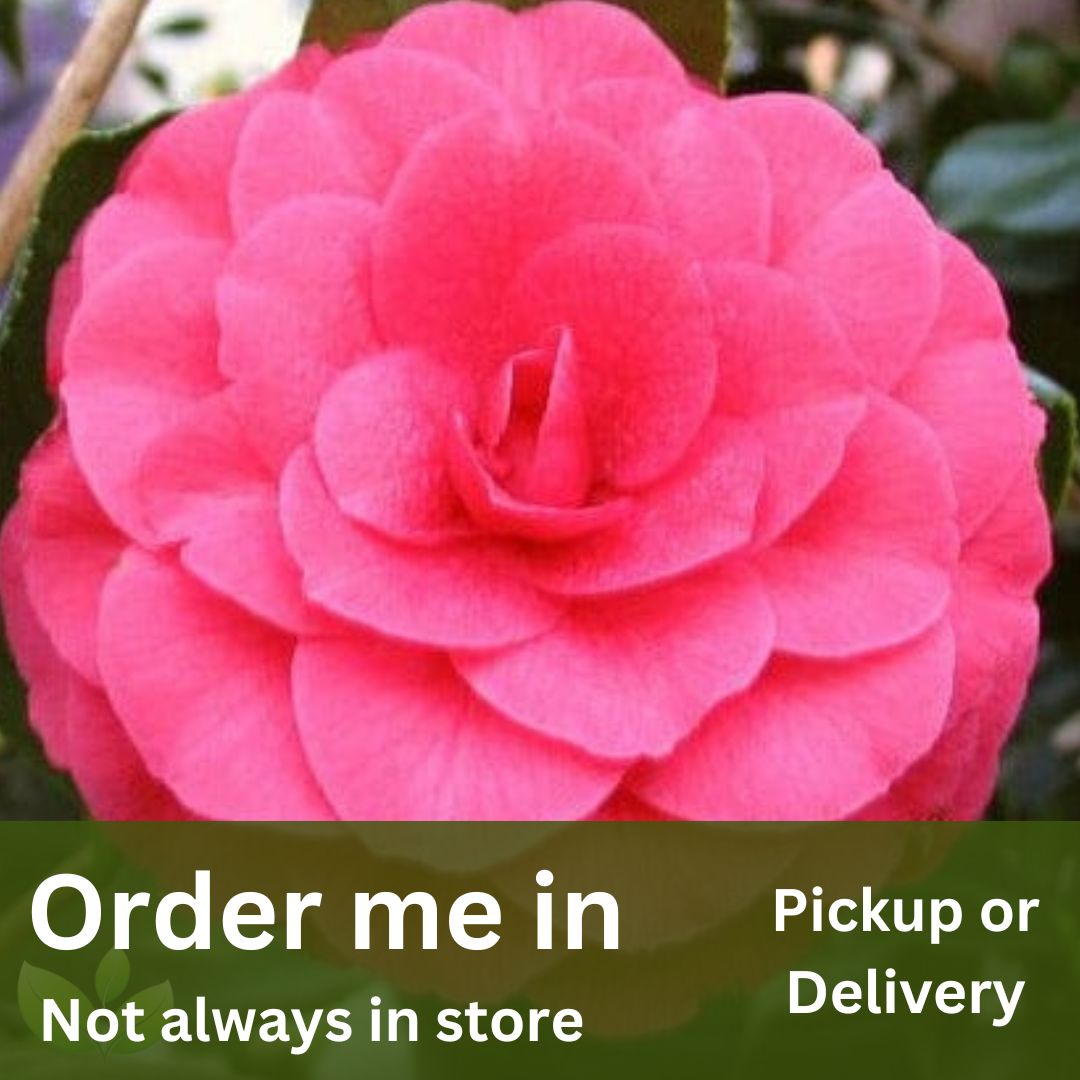
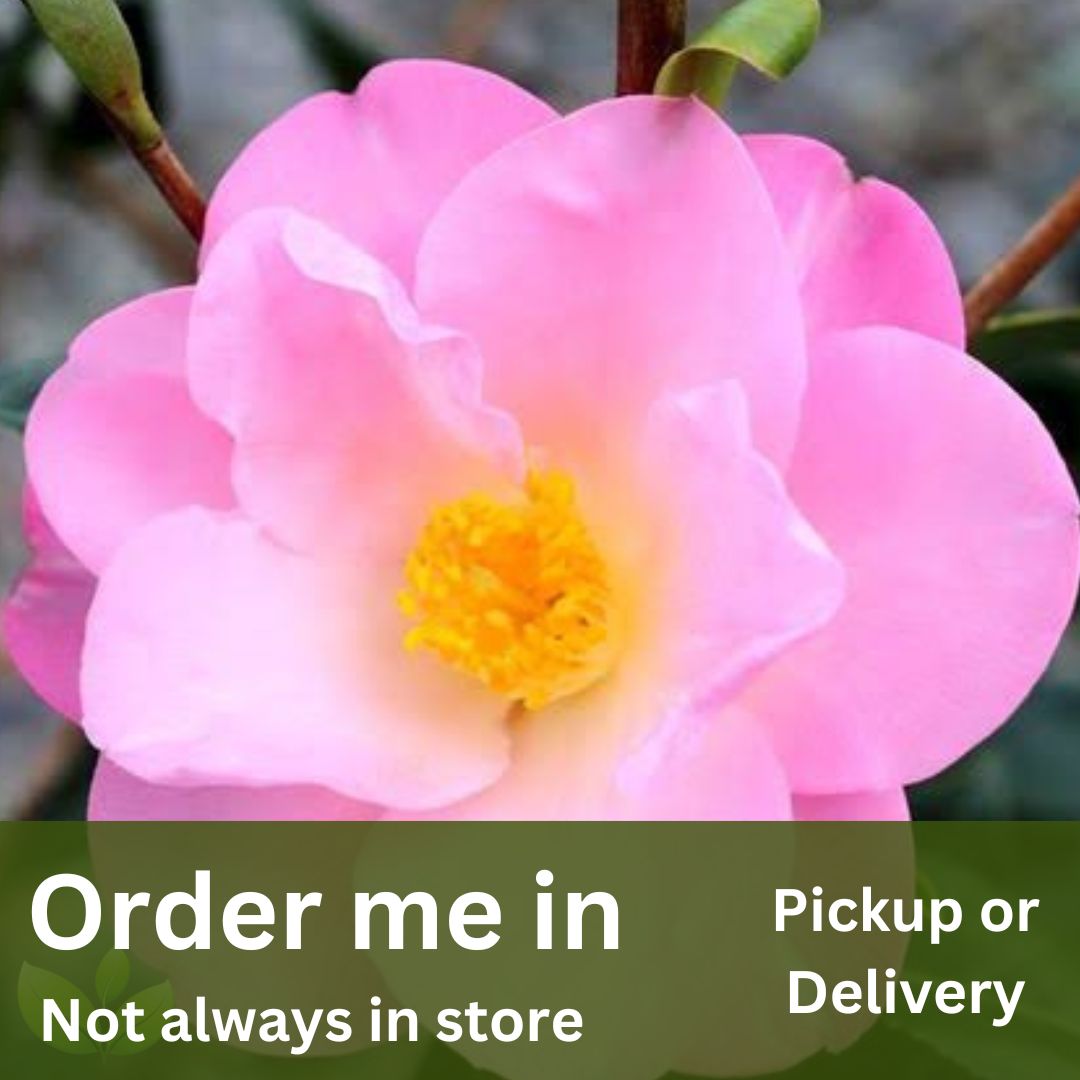
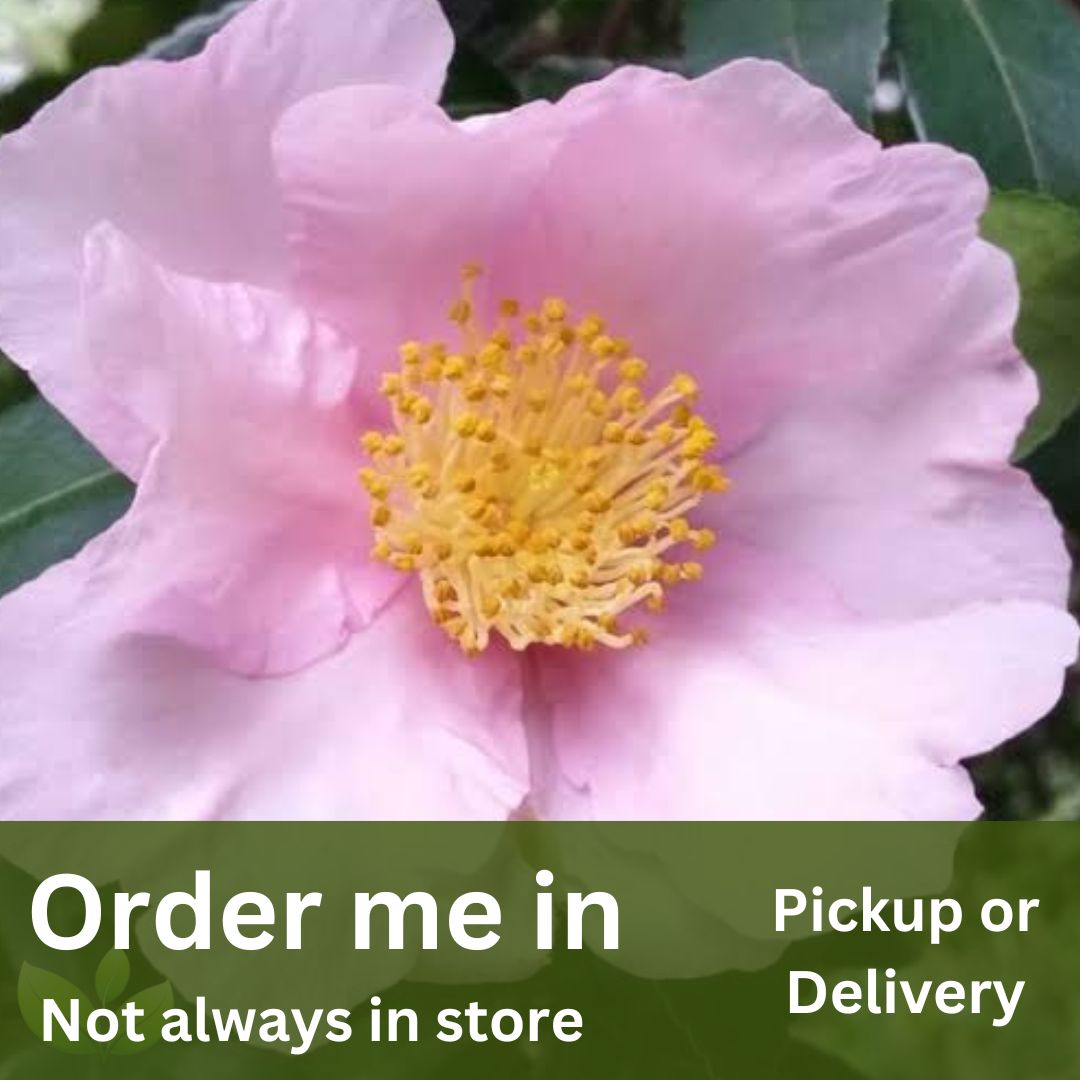
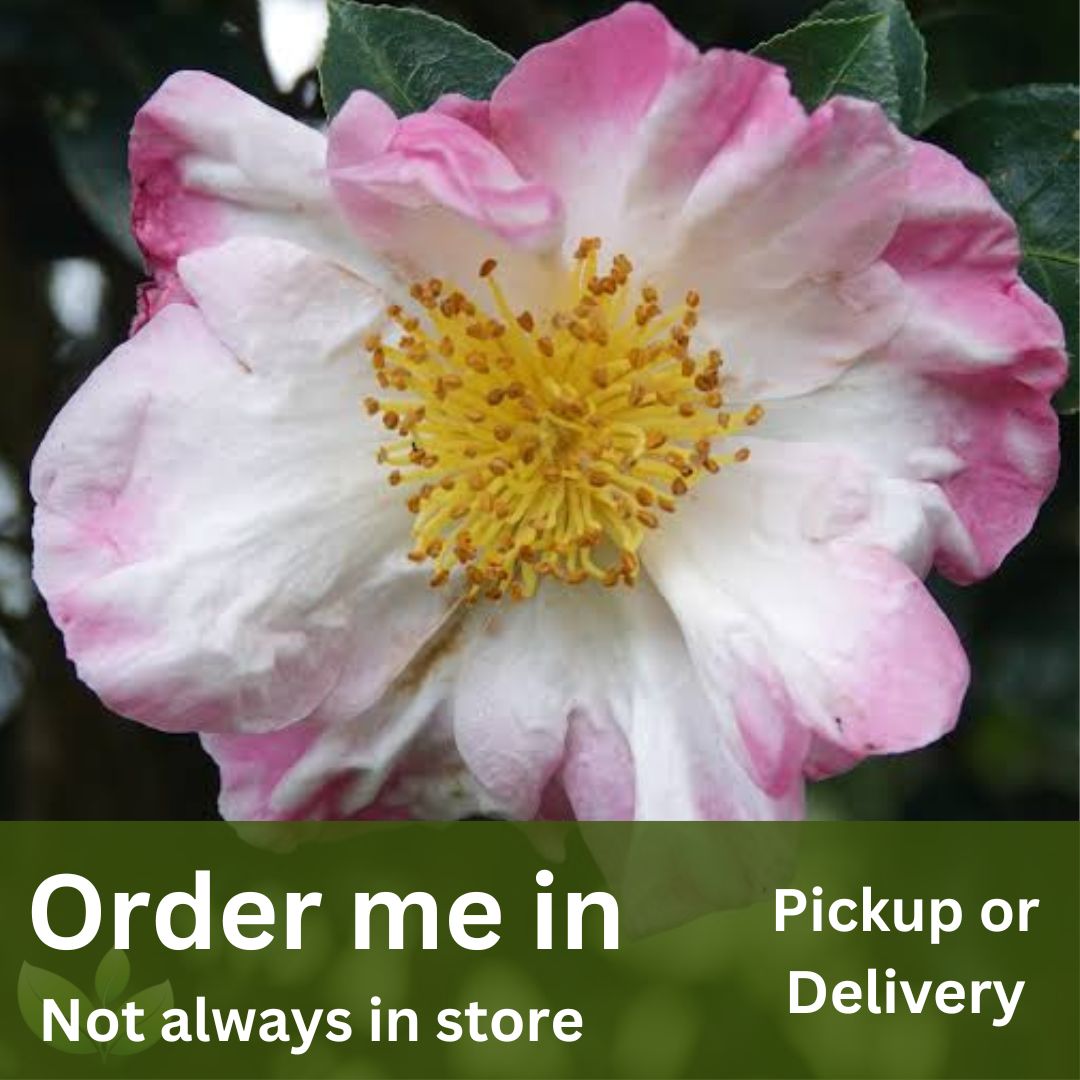
Camellia japonica 'Ardoch' is a beautiful evergreen flowering shrub admired for its delicate pink flowers, glossy dark green foliage and attractive upright growth habit. Its distinctive blooms feature broad outer petals surrounding a centre of smaller, ruffled petals and golden stamens, creating a soft, elegant display during winter. With its naturally bushy growth and year-round evergreen foliage, 'Ardoch' is an excellent choice for feature planting, flowering hedges, sheltered garden beds and large decorative pots. Its soft pink flowers provide a beautiful contrast against the deep green foliage, bringing colour and interest to gardens during the cooler months. Particularly suited to sheltered Sunshine Coast gardens, 'Ardoch' performs best in positions receiving morning sunlight or filtered shade, with protection from harsh afternoon sun. Flowers Beautiful medium-sized, delicate pink incomplete double flowers, featuring approximately two rows of broad outer petals surrounding a centre of smaller, irregularly arranged petals and visible stamens. The flowers have a soft, ruffled appearance, sometimes resembling an anemone or loose peony form. Flowering generally occurs during winter, particularly July and August in Australian conditions, although the flowering period may extend into early spring depending on local temperatures and seasonal conditions. Foliage Glossy, deep green evergreen leaves with a leathery texture and finely serrated margins. The attractive foliage provides year-round garden structure and creates a beautiful contrast against the delicate pink flowers. Fruit Small, rounded woody seed capsules may occasionally develop following flowering but are not a significant ornamental feature. Form & Size Upright, bushy evergreen shrub with a moderate growth rate and naturally dense branching. Approximately 2.5–3 m high × 1.5–2.5 m wide under typical garden conditions, although older plants may become larger if left unpruned in favourable conditions. Responds well to pruning and can be maintained as a smaller flowering hedge or compact feature shrub. Growing Conditions Position: Partial shade to filtered sunlight. Morning sun with protection from harsh afternoon sun is ideal, particularly in warmer Sunshine Coast gardens. Soil: Fertile, slightly acidic, well-drained soil enriched with compost and organic matter. Water: Regular watering during establishment. Maintain consistent soil moisture during dry periods, particularly while flower buds are developing. Frost: Tolerates light frost once established, although open flowers and developing buds may be damaged by severe frost. Wind: Prefers sheltered positions protected from strong, hot or drying winds. Climate: Suitable for temperate and mild subtropical gardens, including sheltered Sunshine Coast locations with suitable soil, drainage and moisture conditions. Uses Ideal for feature shrubs, flowering hedges, informal privacy screening, shaded garden beds, cottage gardens, Japanese-inspired gardens, woodland-style planting and large decorative pots. Particularly attractive when planted near pathways, entrances, patios or outdoor entertaining areas where its delicate pink flowers can be appreciated during winter. Its upright growth habit also makes it suitable for planting beneath the filtered canopy of larger trees. Maintenance Apply organic mulch around the root zone to conserve moisture, regulate soil temperature and maintain healthy soil conditions. Keep mulch clear of the main stem. Fertilise with a suitable camellia and azalea fertiliser during spring, following the manufacturer's recommended application rates. Prune lightly after flowering to maintain the desired shape and encourage dense branching. Remove dead, damaged or crossing branches as required. Maintain consistent soil moisture during warmer months, particularly for plants grown in containers. Avoid heavy pruning late in the growing season, as this may remove developing flower buds. Notes 'Ardoch' is a historic Camellia japonica cultivar associated with Japanese plant material imported into Victoria, Australia, during the late 19th century. It was subsequently recorded in Australian nursery literature in 1951. Its distinctive delicate pink flowers feature broad outer petals surrounding a loosely arranged centre of smaller petals and stamens, giving each bloom a slightly different appearance. Unlike formal double camellias, which produce tightly arranged, symmetrical flowers, 'Ardoch' displays a more relaxed and natural flower structure. For informal flowering hedges, plants can generally be spaced approximately 1.2–1.5 m apart, depending on the desired density and available growing space. Companion Plants Azalea, Gardenia, Hydrangea, Clivia, Ferns, Liriope, Pieris and other Camellia japonica varieties. Common Name: Ardoch Camellia / Japanese Camellia Botanical Name: Camellia japonica 'Ardoch' Family: Theaceae Origin: Japanese cultivar introduced into Australian cultivation; recorded in Australian nursery literature in 1951.

Regular price $35.00 AUD
Regular price Sale price $35.00 AUD
Unit price  per 
Camellia japonica Black Tie – Camellia black tie plant Garden centre Sunshine Coast

Camellia japonica Black Tie

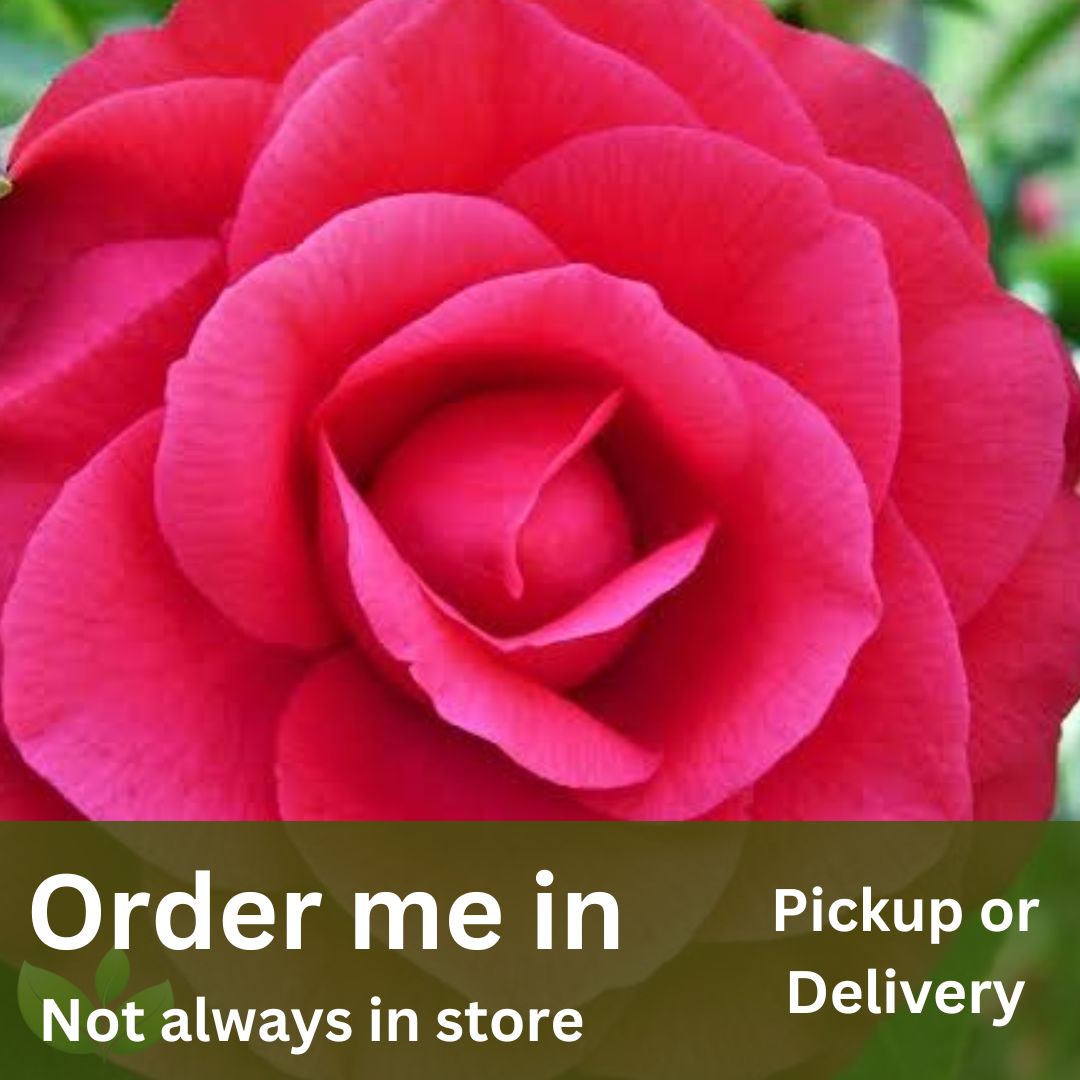
Camellia japonica 'Black Tie' is a stunning evergreen flowering shrub renowned for its beautiful, deep crimson-red flowers, perfectly formed double blooms and glossy dark green foliage. Its distinctive rose-like flowers feature numerous tightly overlapping petals, creating an elegant display during winter and spring. With its naturally upright, dense growth habit and rich flower colour, 'Black Tie' is an excellent choice for feature planting, flowering hedges, sheltered garden beds and decorative pots. Its relatively compact growth makes it particularly suitable for smaller gardens, courtyards and formal landscapes. The deep red flowers can appear almost black in certain lighting conditions, making this variety particularly striking against its glossy evergreen foliage. For Sunshine Coast gardens, 'Black Tie' performs best in sheltered positions with morning sunlight and protection from harsh afternoon sun. Flowers Beautiful small to medium-sized, formal double flowers in rich, dark crimson-red to burgundy-red shades. Each bloom features approximately 60 tightly overlapping petals arranged in a symmetrical, rosebud-like formation. Individual flowers generally measure approximately 7–8 cm across and 4 cm deep. The deep red colouring can appear particularly dark in cooler conditions or shaded positions. Flowers appear from winter through spring, with the main display generally occurring during the middle of the Camellia japonica flowering season. In Australian conditions, flowering is commonly seen from July to October, depending on local climate and seasonal temperatures. Foliage Glossy, deep green evergreen leaves with a leathery texture and finely serrated margins. The foliage is naturally dense, providing attractive year-round garden structure and creating a striking contrast against the dark red flowers. Fruit Small, rounded woody seed capsules may occasionally develop following flowering, although fruit production is generally limited in this formal double-flowering cultivar. Form & Size Upright, densely branched evergreen shrub with a compact to medium growth habit and moderate growth rate. Approximately 2.5–3 m high × 1.5–2 m wide under typical garden conditions. Older plants may grow larger when left unpruned in favourable conditions. Its naturally upright habit and dense branching make it particularly suitable for formal flowering hedges, feature shrubs and large decorative containers. Growing Conditions Position: Partial shade to filtered sunlight. Morning sun with protection from harsh afternoon sun is ideal, particularly in warmer Sunshine Coast gardens. Soil: Fertile, slightly acidic, well-drained soil enriched with compost and organic matter. Water: Regular watering during establishment. Maintain consistent soil moisture during dry periods, particularly while flower buds are developing. Frost: Tolerates light to moderate frost once established, although open flowers and developing buds may be damaged by severe frost. Wind: Prefers sheltered positions protected from strong, hot or drying winds. Climate: Suitable for temperate and mild subtropical gardens, including sheltered Sunshine Coast locations with suitable soil, drainage and moisture conditions. Uses Ideal for feature shrubs, flowering hedges, informal privacy screening, shaded garden beds, formal gardens, Japanese-inspired gardens, courtyard planting and large decorative pots. Particularly attractive when planted near entrances, pathways, patios or outdoor entertaining areas where its beautifully formed, dark red flowers can be appreciated up close. Its dense growth habit also makes it suitable for espalier or training against a sheltered wall. Maintenance Apply organic mulch around the root zone to conserve moisture, regulate soil temperature and maintain healthy soil conditions. Keep mulch clear of the main stem. Fertilise with a suitable camellia and azalea fertiliser during spring, following the manufacturer's recommended application rates. Prune lightly after flowering to maintain the desired shape and encourage dense branching. Remove dead, damaged or crossing branches as required. Maintain consistent soil moisture during warmer months, particularly for plants grown in containers. Avoid heavy pruning late in the growing season, as this may remove developing flower buds. Notes 'Black Tie' is an American-raised Camellia japonica cultivar developed by Spencer C. Walden Jr. of Georgia, USA. The original seedling first flowered in 1968 and was formally registered with the American Camellia Society in 1975. Its distinctive formal double flowers feature approximately 60 petals and resemble perfectly formed miniature red roses. The rich crimson-red flowers can appear almost black in shaded conditions, although the cultivar is botanically classified as dark red rather than black. 'Black Tie' should not be confused with 'Black Tie Variegated', a separate flowering form featuring dark red petals blotched with white. For flowering hedges, plants can generally be spaced approximately 1–1.5 m apart, depending on the desired density and available growing space. Companion Plants Azalea, Gardenia, Hydrangea, Clivia, Ferns, Liriope, Pieris and other Camellia japonica varieties. Common Name: Black Tie Camellia / Japanese Camellia Botanical Name: Camellia japonica 'Black Tie' Family: Theaceae Origin: American horticultural cultivar, Georgia, USA (registered 1975); Camellia japonica is native to East Asia.

Regular price $35.00 AUD
Regular price Sale price $35.00 AUD
Unit price  per 
Camellia japonica CM Hovey – Camellia cmhoovey plant Garden centre Sunshine Coast

Camellia japonica CM Hovey

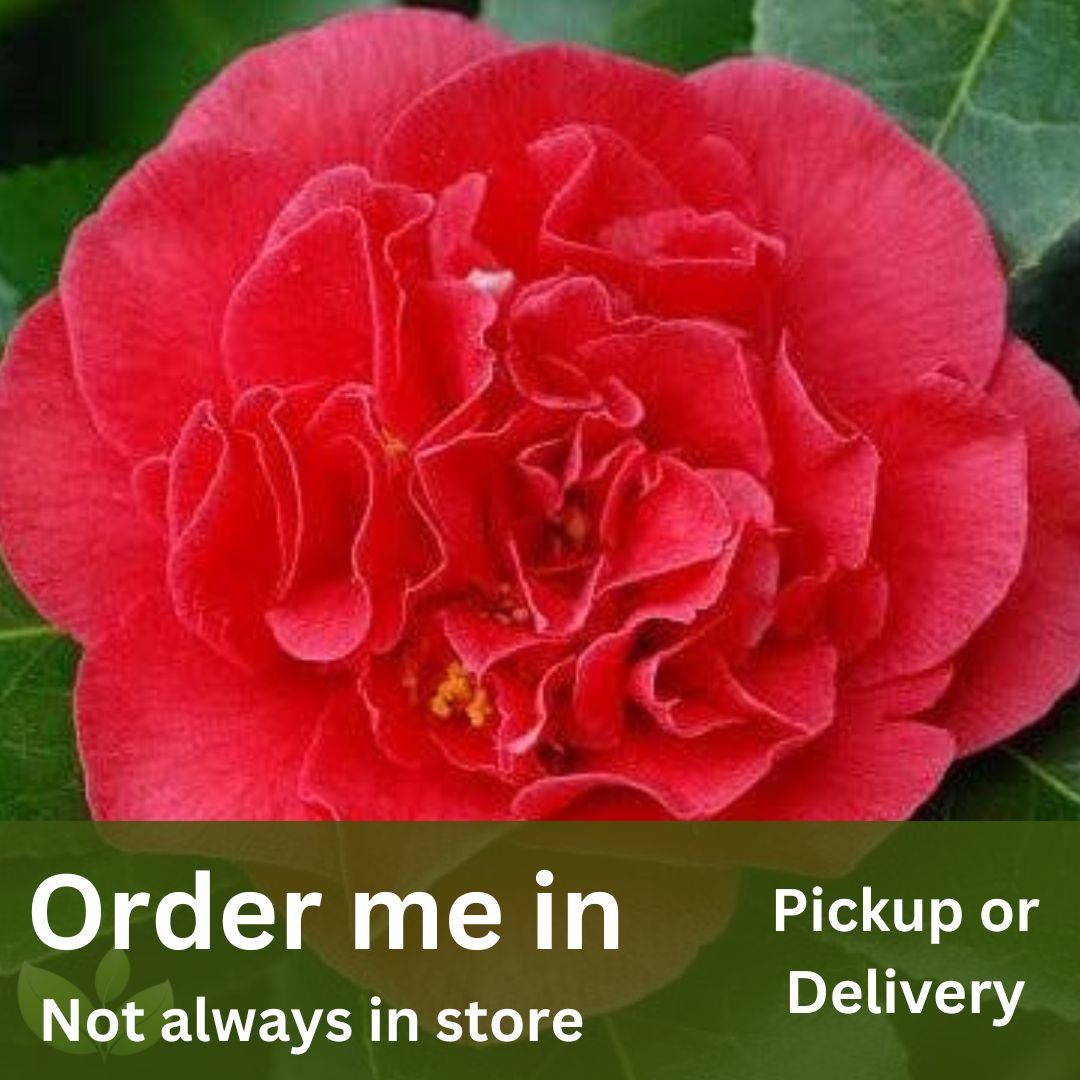
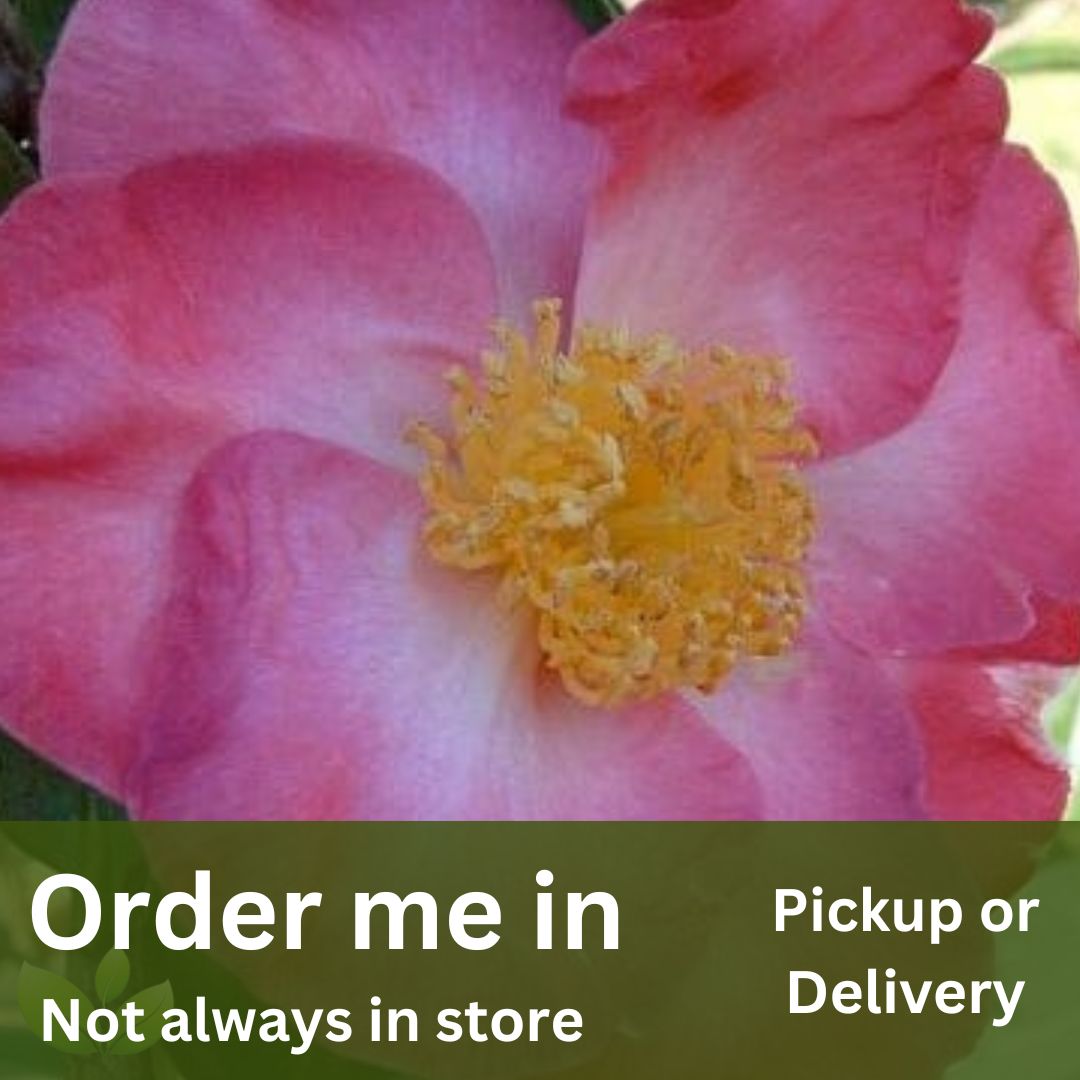
Camellia japonica 'C. M. Hovey' is a magnificent evergreen flowering shrub prized for its large, richly coloured formal double flowers and glossy dark green foliage. Flowering during winter and spring, this classic Japanese Camellia variety creates a spectacular seasonal display and is an excellent choice for shaded gardens, feature planting and elegant flowering screens. Unlike sasanqua camellias, Camellia japonica generally prefers protection from strong afternoon sun, making 'C. M. Hovey' particularly suitable for sheltered garden positions. Flowers Beautiful, medium to large formal double flowers, typically rich rose-red to deep pinkish-red, with numerous overlapping petals arranged in a symmetrical pattern. Flowers appear during winter and spring, often extending into late spring in cooler climates. Foliage Large, glossy, deep green evergreen leaves with a leathery texture, providing attractive year-round garden structure. Fruit Occasional rounded woody seed capsules may develop following flowering. Form & Size Dense, upright evergreen shrub, approximately 2.5–4 m high × 1.5–2.5 m wide when mature. Can be maintained smaller through careful pruning. Growing Conditions Position: Partial shade or filtered sunlight, protected from harsh afternoon sun. Soil: Fertile, slightly acidic, well-drained soil enriched with organic matter. Water: Regular watering to maintain consistent soil moisture, especially during flowering and dry periods. Frost: Tolerates light frost once established, although exposed flower buds and blooms may be damaged by frost. Wind: Prefers sheltered positions protected from strong, drying winds. Climate: Suitable for subtropical and temperate gardens where adequate shade, moisture and drainage are provided. Uses Feature shrubs, shaded garden beds, flowering screens, sheltered courtyards, woodland-style gardens and large decorative containers. Maintenance Apply organic mulch to maintain soil moisture and protect the root zone. Fertilise with a suitable camellia and azalea fertiliser in spring. Prune lightly after flowering to maintain the desired shape and remove damaged or crossing branches. Notes A classic formal double camellia with striking, richly coloured flowers. Best planted where its winter and spring display can be appreciated up close. On the Sunshine Coast, a sheltered position with morning sun and afternoon shade is recommended. Companion Plants Azalea, Gardenia, Hydrangea, Ferns, Clivia and Liriope. Common Name: C. M. Hovey Camellia / Japanese CamelliaBotanical Name: Camellia japonica 'C. M. Hovey'Family: TheaceaeOrigin: Horticultural cultivar of Camellia japonica, a species native to East Asia.

Regular price $35.00 AUD
Regular price Sale price $35.00 AUD
Unit price  per 
Camellia Japonica Emperor of Russia Variegated – Camellia emperorofrussia plant Garden centre Sunshine Coast

Camellia Japonica Emperor of Russia Variegated

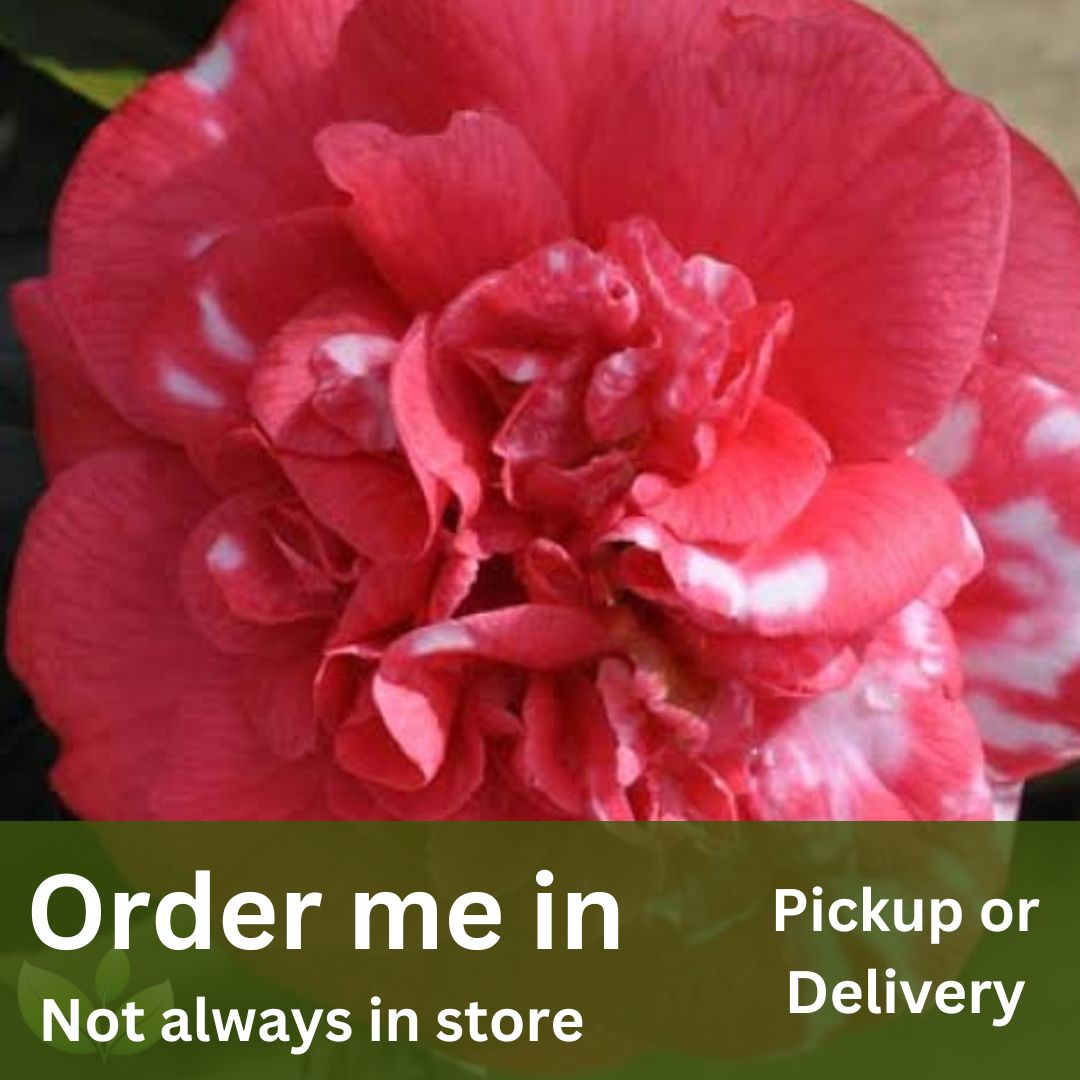
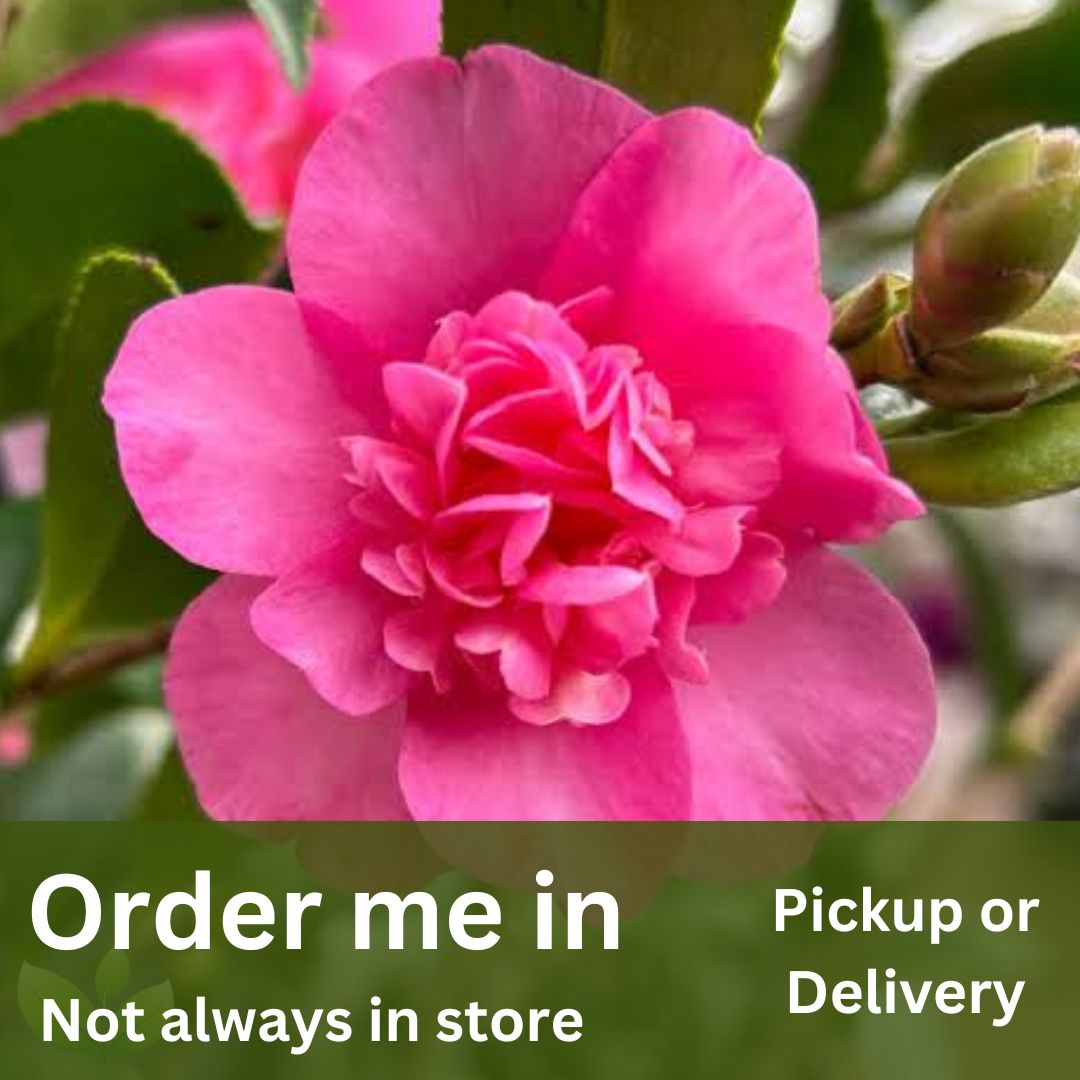
Camellia japonica 'Emperor of Russia Variegated' is a magnificent evergreen flowering shrub renowned for its spectacular scarlet-red flowers marbled and splashed with white. Its beautifully formed, peony-style blooms feature layers of richly coloured petals, with occasional golden-yellow stamens adding further contrast. Flowering throughout winter and into spring, this distinctive camellia creates an impressive seasonal display against its glossy, dark green foliage. The combination of striking two-toned flowers and a naturally upright, bushy growth habit makes it an excellent choice for feature planting, flowering screens, sheltered garden beds and decorative pots. Particularly attractive in Sunshine Coast gardens, 'Emperor of Russia Variegated' performs best in sheltered positions receiving morning sunlight and protection from harsh afternoon sun. Flowers Beautiful medium to large, peony-form double flowers in brilliant scarlet-red, irregularly marbled, streaked and blotched with white. The flowers feature numerous overlapping and twisted inner petals, with golden-yellow stamens sometimes visible among the central petals. Individual flowers are generally around 8–10 cm across, although flower size and the amount of white variegation can vary between blooms. Flowering occurs during winter and spring, typically from July to September in Australian conditions, depending on local climate and seasonal temperatures. Foliage Glossy, deep green evergreen leaves with a leathery texture and finely serrated margins. The dense foliage provides attractive year-round garden structure and creates a beautiful contrast against the vibrant red and white flowers. Fruit Small, rounded woody seed capsules may occasionally develop following flowering, although fruit production is not a significant ornamental feature. Form & Size Slow to moderately growing, upright and bushy evergreen shrub with a naturally dense growth habit. Approximately 2.5–4 m high × 1.5–2 m wide when mature, depending on growing conditions and available space. Its relatively compact branching habit makes it suitable for feature planting, informal flowering screens and large decorative pots. Plants can be maintained at a smaller size through careful pruning. Growing Conditions Position: Partial shade to filtered sunlight. Morning sun with protection from harsh afternoon sun is ideal, particularly in warmer Sunshine Coast gardens. Soil: Fertile, slightly acidic, well-drained soil enriched with compost and organic matter. Water: Regular watering during establishment. Maintain consistent soil moisture during dry periods, particularly while flower buds are developing. Frost: Tolerates light frost once established, although open flowers and developing buds may be damaged by severe frost. Wind: Prefers sheltered positions protected from strong, hot or drying winds. Climate: Well suited to temperate and mild subtropical gardens, including sheltered Sunshine Coast locations with suitable soil, drainage and moisture conditions. Uses Ideal for feature shrubs, flowering hedges, informal privacy screening, shaded garden beds, formal gardens, Japanese-inspired gardens, woodland-style planting and large decorative pots. Particularly attractive when planted near entrances, pathways, patios or outdoor entertaining areas where its spectacular red and white flowers can be appreciated during winter and spring. Maintenance Apply organic mulch around the root zone to conserve moisture, regulate soil temperature and maintain healthy soil conditions. Keep mulch clear of the main stem. Fertilise with a suitable camellia and azalea fertiliser during spring, following the manufacturer's recommended application rates. Prune lightly after flowering to maintain the desired shape and encourage dense branching. Remove dead, damaged or crossing branches as required. Maintain consistent soil moisture during warmer months, particularly for plants grown in containers. Avoid heavy pruning late in the growing season, as this may remove developing flower buds. Notes 'Emperor of Russia Variegated' is an American horticultural selection recorded in 1944. It is a variegated flowering form of Camellia japonica 'Emperor of Russia', with its distinctive red and white flower colouring associated with a naturally occurring variegation virus. The term Variegated refers to the distinctive marbling and white markings on the flowers rather than variegated foliage. The leaves are normally solid dark green. Each flower can display a slightly different pattern of white markings, making this variety particularly interesting as a feature plant. For informal flowering screens, plants can generally be spaced approximately 1.2–1.5 m apart, depending on the desired density and available growing space. Companion Plants Azalea, Gardenia, Hydrangea, Clivia, Ferns, Liriope, Pieris and other Camellia japonica varieties. Common Name: Emperor of Russia Variegated Camellia / Japanese Camellia Botanical Name: Camellia japonica 'Emperor of Russia Variegated' Family: Theaceae Origin: American horticultural selection, recorded in 1944; Camellia japonica is native to East Asia.

Regular price $35.00 AUD
Regular price Sale price $35.00 AUD
Unit price  per 
Camellia japonica Kramers Supreme – Camellia kramerssupreme plant Garden centre Sunshine Coast

Camellia japonica Kramers Supreme

Camellia japonica 'Kramer's Supreme' is a magnificent evergreen flowering shrub renowned for its spectacular, large, deep red flowers, delicate fragrance and glossy dark green foliage. Its impressive peony-shaped blooms feature numerous beautifully ruffled petals, creating a stunning display during winter and spring. Unlike many Camellia japonica varieties, 'Kramer's Supreme' is particularly valued for its fragrant flowers, making it an excellent choice for planting near patios, pathways and outdoor entertaining areas where its beautiful blooms can be appreciated. With its vigorous, upright growth habit and naturally dense foliage, this outstanding camellia is ideal for feature planting, flowering hedges, privacy screening and large decorative pots. It performs particularly well in sheltered Sunshine Coast gardens with morning sunlight and protection from harsh afternoon sun. Flowers Large to very large, fully double, peony-form flowers in rich crimson to brilliant deep red. The blooms feature numerous overlapping, ruffled petals, creating a full, rounded appearance resembling a traditional peony. Individual flowers generally measure approximately 10–13 cm across and have a delicate, pleasant fragrance. Flowers appear during winter and spring in Australian conditions, with the main display typically occurring from July to September, depending on local temperatures and seasonal conditions. Foliage Large, glossy, deep green evergreen leaves with a leathery texture and finely serrated margins. The dense foliage provides attractive year-round garden structure and creates a beautiful contrast against the vibrant red flowers. Fruit Small, rounded woody seed capsules may occasionally develop following flowering, although fruit production is generally limited and not a significant ornamental feature. Form & Size Vigorous, upright and densely branched evergreen shrub with a naturally bushy growth habit. Approximately 2.5–4 m high × 1.5–2.5 m wide when mature, depending on growing conditions and available space. Growth is relatively strong for a Camellia japonica, and established plants develop into attractive, well-shaped shrubs. Responds well to pruning and can be maintained at a smaller size for flowering hedges and feature planting. Growing Conditions Position: Partial shade to filtered sunlight. Morning sun with protection from harsh afternoon sun is ideal, particularly in warmer Sunshine Coast gardens. Soil: Fertile, slightly acidic, well-drained soil enriched with compost and organic matter. Water: Regular watering during establishment. Maintain consistent soil moisture during dry periods, particularly while flower buds are developing. Frost: Tolerates light to moderate frost once established, although open flowers and developing buds may be damaged by severe frost. Wind: Prefers sheltered positions protected from strong, hot or drying winds. Climate: Well suited to temperate and mild subtropical gardens, including sheltered Sunshine Coast locations with suitable soil, drainage and moisture conditions. Uses Ideal for feature shrubs, flowering hedges, privacy screening, shaded garden beds, formal gardens, Japanese-inspired gardens, woodland-style planting and large decorative pots. Particularly attractive when planted near entrances, pathways, patios or outdoor entertaining areas where its spectacular fragrant red flowers can be appreciated during winter and spring. Maintenance Apply organic mulch around the root zone to conserve moisture, regulate soil temperature and maintain healthy soil conditions. Fertilise with a suitable camellia and azalea fertiliser during spring, following the manufacturer's recommended application rates. Prune lightly after flowering to maintain the desired shape and encourage dense branching. Remove dead, damaged or crossing branches as required. Maintain consistent soil moisture during warmer months, particularly for plants grown in containers. Avoid heavy pruning late in the growing season, as this may remove developing flower buds. Notes 'Kramer's Supreme' is an American-raised Camellia japonica cultivar developed by August Kramer of Kramer Brothers Nurseries in Upland, California. The original seedling first flowered in 1957 and was formally registered with the American Camellia Society in 1983. It is particularly admired for its exceptionally large, fragrant red flowers and vigorous, upright growth habit. The cultivar has received several prestigious camellia awards and was recognised with the Royal Horticultural Society's Award of Garden Merit. Unlike many traditional Camellia japonica varieties, 'Kramer's Supreme' produces noticeably fragrant flowers, making it a particularly desirable addition to ornamental gardens. For flowering hedges or screening, plants can generally be spaced approximately 1.2–1.5 m apart, depending on the desired density and available growing space. Companion Plants Azalea, Gardenia, Hydrangea, Clivia, Ferns, Liriope, Pieris and other Camellia japonica varieties. Common Name: Kramer's Supreme Camellia / Japanese Camellia Botanical Name: Camellia japonica 'Kramer's Supreme' Family: Theaceae Origin: American horticultural cultivar, Kramer Brothers Nurseries, California, USA; registered in 1983. Camellia japonica is native to East Asia.

Regular price $35.00 AUD
Regular price Sale price $35.00 AUD
Unit price  per 
Camellia japonica Little Red Riding Hood – Camellia redridinghood plant Garden centre Sunshine Coast

Camellia japonica Little Red Riding Hood

Camellia japonica 'Little Red Riding Hood' is a beautiful evergreen flowering shrub admired for its brilliant crimson-red flowers, compact upright growth habit and glossy dark green foliage. Its distinctive miniature, formal double blooms feature neatly overlapping petals that create a striking rose-like appearance during winter and spring. Despite its delicate flowers, 'Little Red Riding Hood' is a vigorous-growing camellia that develops into an attractive, densely branched shrub. Its combination of vibrant flowers and year-round evergreen foliage makes it an excellent choice for feature planting, flowering hedges, sheltered garden beds and decorative pots. Particularly suited to positions receiving morning sunlight and afternoon shade, this attractive variety brings spectacular winter colour to Sunshine Coast gardens. Flowers Beautiful miniature, formal double flowers in rich crimson-red, featuring numerous tightly overlapping petals arranged in a neat, symmetrical formation. Individual flowers measure approximately 5–7 cm across and resemble miniature red roses. The blooms generally conceal their stamens beneath the densely arranged petals. Flowers appear during winter and spring, typically from July to September in suitable Australian conditions, although flowering times vary with location and seasonal temperatures. Foliage Glossy, deep green evergreen leaves with a leathery texture and finely serrated margins. The dense foliage provides attractive year-round colour and creates a beautiful contrast against the vibrant crimson-red flowers. Fruit Small, rounded woody seed capsules may occasionally develop following flowering, although fruit production is generally limited due to the formal double flower structure. Form & Size Vigorous, upright and compact evergreen shrub with a naturally bushy growth habit. Approximately 1.5–2.5 m high × 1–1.5 m wide under typical garden conditions, although older plants may become larger if left unpruned. Its dense, upright growth makes it particularly suitable for smaller flowering hedges and feature planting. Growing Conditions Position: Partial shade to filtered sunlight. Morning sun with protection from harsh afternoon sun is ideal, particularly in warmer Sunshine Coast gardens. Soil: Fertile, slightly acidic, well-drained soil enriched with organic matter. Water: Regular watering during establishment. Maintain consistent soil moisture during dry periods and flower bud development. Frost: Tolerates light frost once established, although open flowers and developing buds may be damaged by severe frost. Wind: Prefers sheltered positions protected from strong, hot or drying winds. Climate: Suitable for temperate and mild subtropical gardens, including sheltered Sunshine Coast locations with suitable soil, drainage and moisture conditions. Uses Ideal for feature shrubs, flowering hedges, informal screening, shaded garden beds, courtyard gardens, Japanese-inspired gardens, woodland-style planting and large decorative pots. Particularly attractive when planted near pathways, entrances or outdoor entertaining areas where its miniature crimson-red flowers can be appreciated up close. Maintenance Apply organic mulch around the root zone to conserve moisture, regulate soil temperature and maintain healthy soil conditions. Fertilise with a suitable camellia and azalea fertiliser during spring, following the manufacturer's recommended application rates. Prune lightly after flowering to maintain the desired shape and encourage dense branching. Its naturally upright, compact growth habit generally requires minimal pruning. Maintain consistent soil moisture during warmer months, particularly for plants grown in containers. Avoid heavy pruning late in the growing season, as this may remove developing flower buds. Notes 'Little Red Riding Hood' is an American-raised camellia cultivar developed by McCaskill Gardens in Pasadena, California. The original seedling first flowered in 1960 and was registered in 1965. Its distinctive miniature crimson-red formal double flowers earned it the William E. Wylam Miniature Award in 1969. Although its flowers are classified as miniature, the plant itself develops into a medium-sized evergreen shrub rather than a miniature plant. For informal flowering hedges, plants can generally be spaced approximately 1–1.2 m apart, depending on the desired density and available growing space. Companion Plants Azalea, Gardenia, Hydrangea, Clivia, Ferns, Liriope, Pieris and other Camellia japonica varieties. Common Name: Little Red Riding Hood Camellia / Japanese Camellia Botanical Name: Camellia japonica 'Little Red Riding Hood' Family: Theaceae Origin: American horticultural cultivar, McCaskill Gardens, California, USA (1965); Camellia japonica is native to East Asia.
Regular price $35.00 AUD
Regular price Sale price $35.00 AUD
Unit price  per 
Camellia japonica Nicky Crisp – Camellia Nickycrisp plant Garden centre Sunshine Coast

Camellia japonica Nicky Crisp

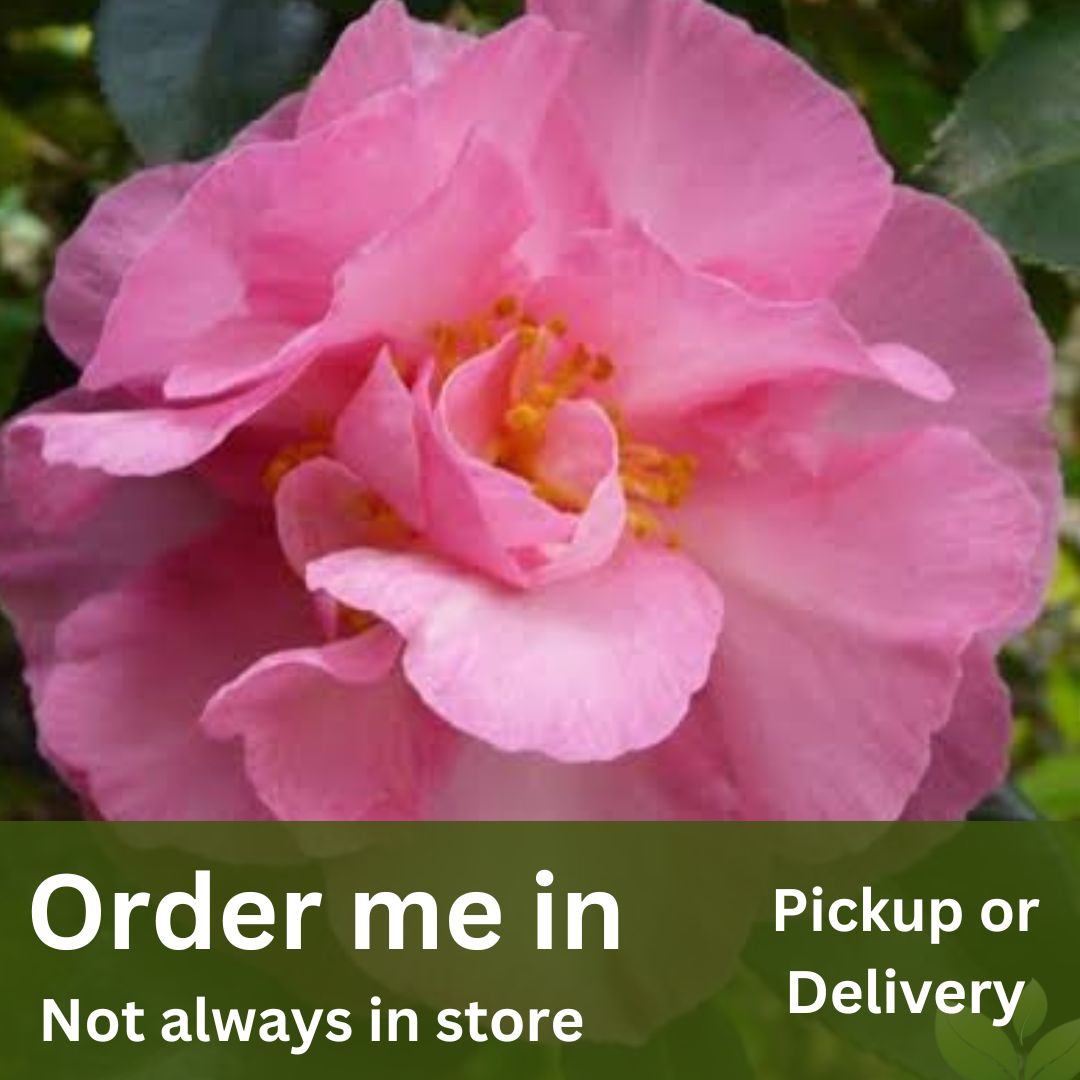
Camellia 'Nicky Crisp' is an elegant evergreen flowering shrub prized for its beautiful lavender-pink flowers, compact growth habit and glossy dark green foliage. Its large, semi-double blooms feature delicately notched petals surrounding prominent golden-yellow stamens, creating a spectacular display throughout winter and spring. With its naturally dense, upright growth and relatively slow growth rate, 'Nicky Crisp' is an excellent choice for feature planting, flowering hedges, sheltered garden beds and decorative pots. Its manageable size makes it particularly suitable for smaller gardens and courtyards. Although commonly sold as Camellia japonica 'Nicky Crisp', this variety is actually a hybrid between Camellia pitardii and Camellia japonica. Flowers Large, semi-double flowers in delicate lavender-pink to soft rosy-pink shades. Each bloom measures approximately 11 cm across and features gently notched petals surrounding a prominent cluster of cream filaments and golden-yellow anthers. Flowers appear during winter and spring, generally from June to September in suitable Australian conditions, although flowering times vary with climate and seasonal temperatures. Foliage Glossy, deep green evergreen leaves with a slightly elongated shape and finely serrated margins. The dense foliage provides attractive year-round colour and creates a beautiful contrast against the delicate pink flowers. Fruit Small, rounded woody seed capsules may occasionally develop following flowering. Fruit production is not a significant ornamental feature. Form & Size Compact, upright and densely branched evergreen shrub with a relatively slow growth rate. Approximately 2–2.5 m high × 1–1.5 m wide when mature, although older plants may become larger in favourable growing conditions. Its naturally compact habit makes it suitable for smaller flowering hedges and feature planting without requiring frequent pruning. Growing Conditions Position: Partial shade to filtered sunlight. Morning sun with protection from harsh afternoon sun is ideal, particularly in warmer Sunshine Coast gardens. Soil: Fertile, slightly acidic, well-drained soil enriched with organic matter. Water: Regular watering during establishment. Maintain consistent soil moisture during dry periods and flower bud development. Frost: Tolerates light frost once established, although developing flower buds and open flowers may be damaged by severe frost. Wind: Prefers sheltered positions protected from strong, hot or drying winds. Climate: Suitable for temperate and mild subtropical gardens, including sheltered Sunshine Coast locations with suitable soil, drainage and moisture conditions. Uses Ideal for feature shrubs, flowering hedges, informal screening, shaded garden beds, courtyard gardens, Japanese-inspired gardens, woodland-style planting and large decorative pots. Particularly attractive when planted near patios, pathways or entrances where its beautifully formed pink flowers can be appreciated during winter and spring. Maintenance Apply organic mulch around the root zone to conserve moisture, regulate soil temperature and maintain healthy soil conditions. Fertilise with a suitable camellia and azalea fertiliser during spring, following the manufacturer's recommended application rates. Prune lightly after flowering if required to maintain the desired shape and encourage dense branching. Its naturally compact growth habit generally requires minimal pruning. Maintain consistent soil moisture during warmer months, particularly for plants grown in containers. Notes 'Nicky Crisp' is a New Zealand-raised camellia hybrid developed by Mrs A. B. Durrant of Rotorua. It first flowered in 1972 and was introduced around 1979. Its distinctive lavender-pink flowers and beautifully notched petals make it particularly attractive as a feature plant. Unlike many larger Camellia japonica varieties, 'Nicky Crisp' maintains a relatively compact growth habit, making it suitable for smaller gardens and sheltered planting positions. For informal hedging, plants can generally be spaced approximately 1–1.2 m apart, depending on the desired density and available growing space. Companion Plants Azalea, Gardenia, Hydrangea, Clivia, Ferns, Liriope, Pieris and other Camellia varieties. Common Name: Nicky Crisp Camellia Botanical Name: Camellia 'Nicky Crisp' (Camellia pitardii × Camellia japonica hybrid) Family: Theaceae Origin: New Zealand horticultural hybrid, introduced around 1979.

Regular price $35.00 AUD
Regular price Sale price $35.00 AUD
Unit price  per 
Camellia japonica Red Red Rose – Camellia redredrose plant Garden centre Sunshine Coast

Camellia japonica Red Red Rose

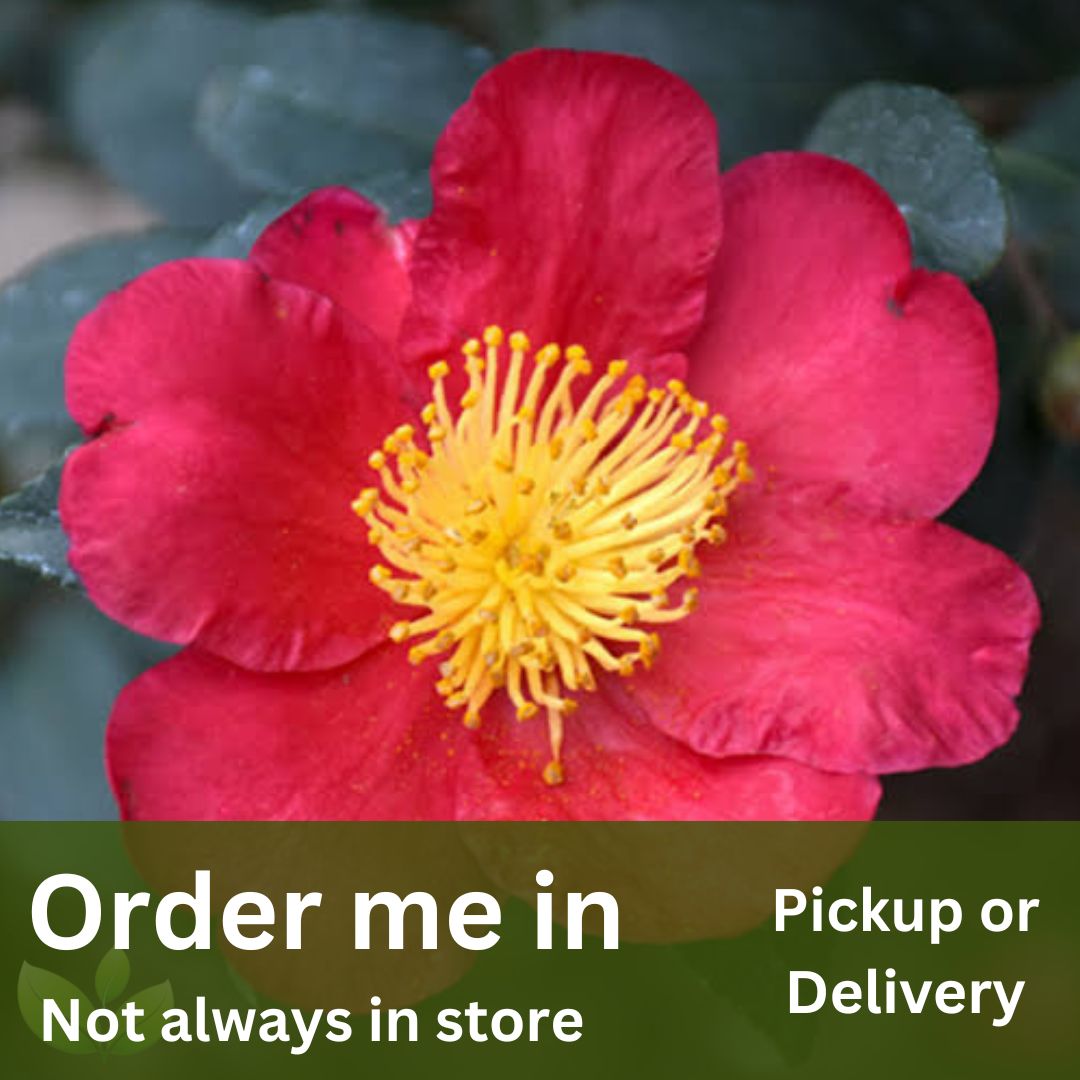
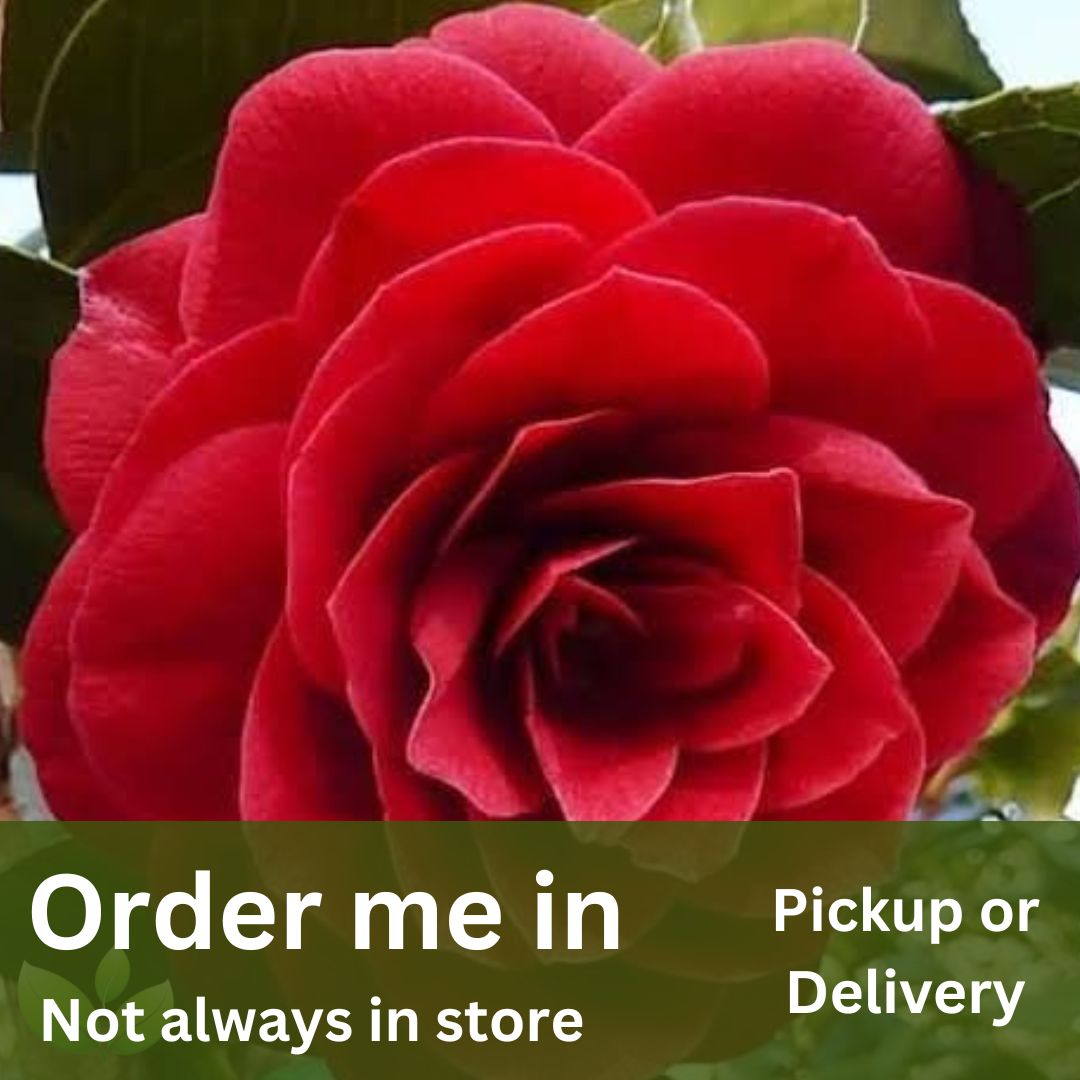
Camellia japonica 'Red Red Rose' is a spectacular evergreen flowering shrub renowned for its rich, bright red double flowers and dense, upright growth habit. Its beautifully layered blooms resemble classic red roses, creating an impressive display during late winter and spring. Combined with glossy, deep green foliage, this elegant camellia provides year-round garden structure and outstanding seasonal colour. With its naturally bushy growth and attractive formal flowers, 'Red Red Rose' is an excellent choice for feature planting, flowering hedges, privacy screening and large decorative pots. Particularly suited to sheltered positions with morning sunlight and afternoon shade, it makes a beautiful addition to Sunshine Coast gardens. Flowers Medium to large, brilliant red formal double flowers with numerous overlapping petals arranged in a symmetrical, rose-like formation. The blooms often feature a raised central cluster of petals, giving them the appearance of a perfectly formed red rose. Flowers appear from late winter through spring, with the main display generally occurring during the later part of the japonica camellia flowering season. Foliage Glossy, deep green evergreen leaves with a leathery texture and finely serrated margins. The dense foliage provides attractive year-round colour and creates a striking contrast against the vibrant red flowers. Fruit Small, rounded woody seed capsules may occasionally develop following flowering, although fruit production is generally limited in this double-flowering cultivar. Form & Size Dense, upright and bushy evergreen shrub, reaching approximately 2.5–4 m high × 1.5–2 m wide when mature under typical garden conditions. Growth is moderate, and plants develop a naturally neat, compact appearance. Older specimens may become larger in favourable conditions. Responds well to pruning and can be maintained as a flowering hedge or compact feature shrub. Growing Conditions Position: Partial shade to filtered sunlight. Morning sun with protection from harsh afternoon sun is ideal, particularly in warmer Sunshine Coast gardens. Soil: Fertile, slightly acidic, well-drained soil enriched with compost and organic matter. Water: Regular watering during establishment. Maintain consistent soil moisture, particularly during dry periods and flower bud development. Frost: Tolerates light frost once established, although developing buds and open flowers may be damaged by severe frost. Wind: Prefers sheltered positions protected from strong, hot or drying winds. Climate: Well suited to temperate and mild subtropical gardens, including sheltered Sunshine Coast locations with suitable soil and moisture conditions. Uses Ideal for feature shrubs, flowering hedges, privacy screening, shaded garden beds, formal gardens, Japanese-inspired gardens, espalier and large decorative pots. Particularly attractive when planted near patios, entrances or outdoor entertaining areas where its spectacular red flowers can be appreciated during winter and spring. Maintenance Apply organic mulch around the root zone to conserve moisture, regulate soil temperature and improve soil conditions. Fertilise with a suitable camellia and azalea fertiliser during spring, following the manufacturer's recommended application rates. Prune lightly after flowering to maintain the desired shape and encourage dense branching. Avoid heavy pruning late in the growing season, as this may remove developing flower buds. Maintain consistent soil moisture during warmer months, particularly for plants grown in containers. Notes 'Red Red Rose' is a distinctive Japanese Camellia cultivar originating from California, USA, and introduced in 1970. It is particularly admired for its beautifully formed red flowers, which closely resemble traditional double roses. Unlike many sasanqua camellias, Camellia japonica varieties generally perform best with protection from intense afternoon sunlight. For flowering hedges or screens, plants can generally be spaced approximately 1.2–1.5 m apart, depending on the desired density and available growing space. Companion Plants Azalea, Gardenia, Hydrangea, Clivia, Ferns, Liriope and other Camellia japonica varieties. Common Name: Red Red Rose Camellia / Japanese Camellia Botanical Name: Camellia japonica 'Red Red Rose' Family: Theaceae Origin: Horticultural cultivar developed by McCaskill Gardens, California, USA (1970); Camellia japonica is native to East Asia.
Regular price $35.00 AUD
Regular price Sale price $35.00 AUD
Unit price  per 
Camellia sasanqua Beatrice Emily – Camellia Beatriceemily plant Garden centre Sunshine Coast

Camellia sasanqua Beatrice Emily

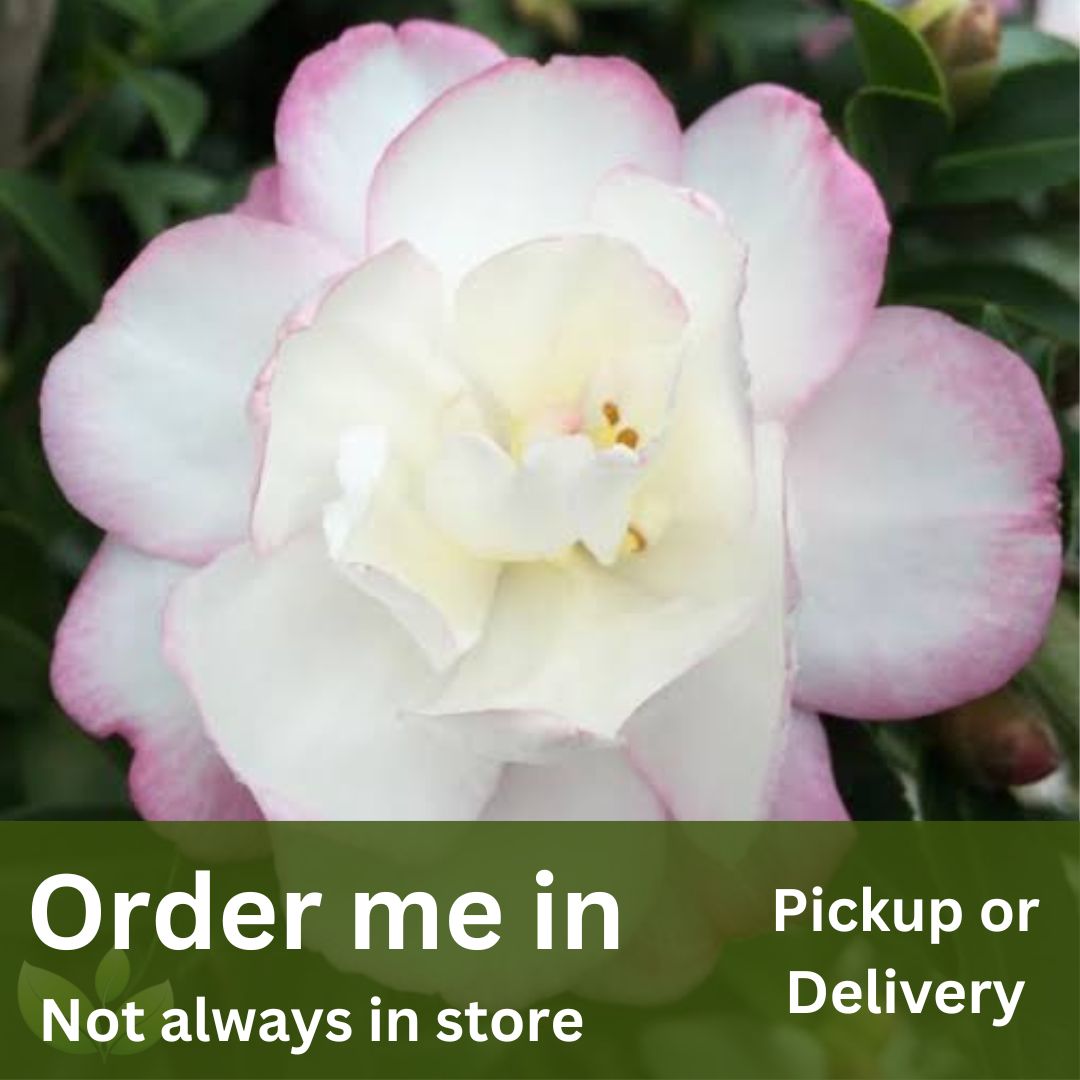
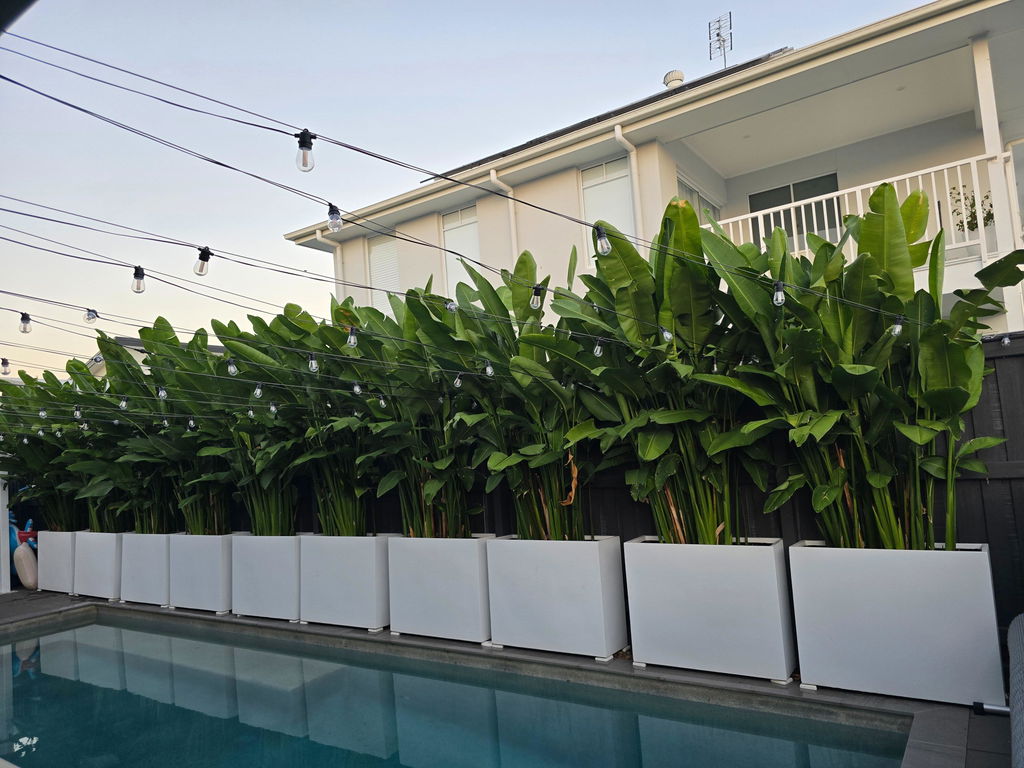
Camellia sasanqua 'Beatrice Emily' Description Camellia sasanqua 'Beatrice Emily' is an elegant evergreen flowering shrub admired for its distinctive white flowers with contrasting pink to rosy-red outer petals. This attractive Australian-raised camellia produces a beautiful display during autumn and early winter, adding delicate colour to gardens while maintaining glossy dark green foliage throughout the year. Its bushy growth habit makes it ideal for flowering hedges, feature planting and decorative garden borders. Flowers Beautiful double to semi-double flowers, predominantly white with contrasting mauve-pink to rosy-red colouring on the outer petals or petal reverses. Flowers appear during autumn and early winter, creating an attractive two-toned display. Foliage Glossy, deep green evergreen leaves providing year-round structure and an attractive backdrop for the flowers. Fruit Small rounded seed capsules may occasionally develop following flowering. Form & Size Bushy, upright evergreen shrub, approximately 2–3 m high × 1.5–2 m wide when mature. Responds well to pruning and can be maintained as a smaller flowering hedge. Growing Conditions Position: Full sun to partial shade. Soil: Fertile, slightly acidic, well-drained soil enriched with organic matter. Water: Regular during establishment and extended dry weather. Frost: Tolerates light frost once established. Wind: Protect from strong, drying winds. Climate: Suitable for mild subtropical and temperate gardens, including suitable Sunshine Coast locations. Uses Flowering hedges, feature shrubs, informal borders, garden screening, espalier and large decorative pots. Maintenance Maintain organic mulch around the root zone, fertilise with a suitable camellia fertiliser during spring and prune lightly after flowering to encourage dense growth. Notes An attractive Australian-raised variety with distinctive two-toned flowers. The contrast between the pale inner petals and darker outer colouring makes it particularly appealing as a feature shrub. Companion Plants Gardenia, Azalea, Hydrangea, Loropetalum and Liriope. Common Name: Beatrice Emily CamelliaBotanical Name: Camellia sasanqua 'Beatrice Emily'Family: TheaceaeOrigin: Australian horticultural cultivar raised in New South Wales.
Regular price $35.00 AUD
Regular price Sale price $35.00 AUD
Unit price  per 
Camellia sasanqua Bert Jones – Camellia Bertjones plant Garden centre Sunshine Coast

Camellia sasanqua Bert Jones

Camellia sasanqua 'Bert Jones' is a beautiful evergreen shrub renowned for its elegant silvery-pink flowers and attractive glossy green foliage. This Australian-raised variety produces an abundance of blooms during autumn and early winter, providing soft seasonal colour and year-round garden structure. Its bushy growth habit makes it an excellent choice for flowering hedges, feature planting and informal borders. Flowers Medium to large, semi-double flowers in delicate silvery pink to soft rose-pink shades, often with gently ruffled petals. Flowers appear during autumn and early winter. Foliage Glossy, dark green evergreen leaves that provide attractive year-round colour and contrast beautifully with the soft pink flowers. Fruit Small rounded seed capsules may occasionally develop after flowering but are not a significant ornamental feature. Form & Size Bushy, medium-sized evergreen shrub, approximately 2–3 m high × 1.5–2 m wide when mature. Can be maintained smaller with regular pruning. Growing Conditions Position: Full sun to partial shade. Soil: Fertile, slightly acidic and well-drained soil enriched with organic matter. Water: Regular watering during establishment and prolonged dry periods. Frost: Tolerates light frost once established. Wind: Prefers protection from strong, drying winds. Climate: Suitable for mild subtropical and temperate gardens, including suitable Sunshine Coast locations. Uses Flowering hedges, feature shrubs, informal borders, garden screening, espalier and large decorative pots. Maintenance Apply organic mulch to maintain soil moisture, fertilise with a suitable camellia fertiliser during spring and prune lightly after flowering to encourage dense, compact growth. Notes An attractive Australian cultivar valued for its distinctive silvery-pink flowers. Its delicate colouring combines beautifully with white-flowering camellias and other evergreen shrubs. Companion Plants Gardenia, Azalea, Hydrangea, Loropetalum and Liriope. Common Name: Bert Jones CamelliaBotanical Name: Camellia sasanqua 'Bert Jones'Family: TheaceaeOrigin: Australian horticultural cultivar raised in New South Wales.

Regular price $35.00 AUD
Regular price Sale price $35.00 AUD
Unit price  per 
Camellia sasanqua Exquisite – Camellia exquisite plant Garden centre Sunshine Coast

Camellia sasanqua Exquisite

Camellia sasanqua 'Exquisite' is a beautiful evergreen flowering shrub admired for its delicate pale pink flowers and attractive glossy green foliage. Flowering during the cooler months, it brings a soft, elegant appearance to gardens and is well suited to feature planting, flowering hedges and informal garden borders. Flowers Large, single to lightly semi-double flowers in delicate pale pink, sometimes appearing almost white with a soft pink wash. Golden stamens add contrast to the blooms. Flowers appear during autumn and early winter. Foliage Glossy, dark green evergreen leaves that provide year-round garden structure and colour. Fruit Small rounded seed capsules may occasionally develop after flowering. Form & Size Bushy evergreen shrub, generally reaching approximately 2–3 m high × 1.5–2 m wide, depending on growing conditions and pruning. Growing Conditions Position: Full sun to partial shade. Soil: Fertile, slightly acidic and well drained. Water: Regular during establishment and extended dry conditions. Frost: Tolerates light frost once established. Wind: Best protected from strong, drying winds. Climate: Suitable for mild subtropical and temperate gardens. Uses Flowering hedges, feature shrubs, informal borders, espalier and decorative containers. Maintenance Mulch around the root zone, fertilise in spring and prune after flowering to maintain a compact, attractive shape. Notes The Australian Waterhouse selection of 'Exquisite' is known for its large pale pink flowers. This should not be confused with a different historical cultivar also recorded under the name 'Exquisite'. Companion Plants Gardenia, Azalea, Hydrangea, Loropetalum and Liriope. Common Name: Exquisite CamelliaBotanical Name: Camellia sasanqua 'Exquisite' (Australian Waterhouse selection)Family: TheaceaeOrigin: Australian horticultural selection associated with E. G. Waterhouse, New South Wales.

Regular price $35.00 AUD
Regular price Sale price $35.00 AUD
Unit price  per 
Camellia sasanqua Fukuzutsumi – Camellia Fukuzutsumi plant Garden centre Sunshine Coast

Camellia sasanqua Fukuzutsumi

Camellia sasanqua 'Fukuzutsumi' is an elegant evergreen shrub featuring beautiful white flowers delicately flushed and edged with soft pink. Its upright, bushy growth habit and glossy dark green foliage provide year-round garden appeal, while its abundant autumn flowers make it a wonderful addition to flowering hedges and feature gardens. Flowers Large, single to semi-double white flowers, often displaying delicate pink flushing or rose-pink edging. Blooms appear during autumn and early winter in Australian conditions. Foliage Glossy, dark green evergreen leaves providing an attractive background for the delicate flowers. Fruit Occasional rounded seed capsules may develop following flowering. Form & Size Upright, bushy evergreen shrub reaching approximately 2–2.5 m high × 1.5–2 m wide, potentially larger over time in favourable conditions. Growing Conditions Position: Full sun to partial shade. Soil: Slightly acidic, fertile and well drained. Water: Regular watering during establishment and dry periods. Frost: Tolerates light frost once established. Wind: Protect from strong, drying winds. Climate: Suitable for mild subtropical and temperate gardens. Uses Flowering hedges, screening, feature shrubs, informal borders, espalier and large containers. Maintenance Apply organic mulch, fertilise with a suitable camellia fertiliser in spring and prune lightly after flowering to encourage dense growth. Notes An attractive Japanese cultivar with delicate two-toned flowers. Its name is associated with a bundle of good fortune. Companion Plants Gardenia, Azalea, Hydrangea, Loropetalum and Liriope. Common Name: Fukuzutsumi CamelliaBotanical Name: Camellia sasanqua 'Fukuzutsumi'Family: TheaceaeOrigin: Japanese horticultural cultivar.

Regular price $35.00 AUD
Regular price Sale price $35.00 AUD
Unit price  per 
Camellia sasanqua Jennifer Susan – Camellia Jenifersusan plant Garden centre Sunshine Coast

Camellia sasanqua Jennifer Susan

Camellia sasanqua 'Jennifer Susan' is a beautiful evergreen shrub admired for its delicate pale pink flowers and vigorous upright growth habit. Producing an abundance of attractive blooms during autumn and winter, it is an excellent choice for creating elegant flowering hedges, garden screens and feature plantings. Flowers Pale pink, informal double flowers, often with gently curled or ruffled petals. Blooms appear during autumn and early winter, providing a soft and elegant seasonal display. Foliage Glossy, deep green evergreen leaves that create an attractive, dense backdrop to the flowers. Fruit Small rounded seed capsules may occasionally develop after flowering. Form & Size Vigorous, upright evergreen shrub reaching approximately 3–4 m high × 2–3 m wide when mature. Can be maintained considerably smaller through regular pruning. Growing Conditions Position: Full sun to partial shade. Soil: Fertile, slightly acidic, well-drained soil. Water: Regular during establishment and extended dry weather. Frost: Tolerates light frost once established. Wind: Best protected from strong, drying winds. Climate: Suitable for subtropical and temperate gardens, including suitable Sunshine Coast locations. Uses Tall flowering hedges, privacy screening, feature planting, espalier and large garden containers. Maintenance Apply organic mulch, fertilise in spring and prune after flowering to maintain the desired height and density. Notes A particularly attractive tall-growing sasanqua camellia, valued for its soft pink flowers and excellent screening potential. Companion Plants Gardenia, Azalea, Hydrangea, Loropetalum and Liriope. Common Name: Jennifer Susan CamelliaBotanical Name: Camellia sasanqua 'Jennifer Susan'Family: TheaceaeOrigin: Horticultural cultivar; sasanqua camellias originate from Japan.

Regular price $35.00 AUD
Regular price Sale price $35.00 AUD
Unit price  per 
Camellia sasanqua Paradise Blush – Camellia paradiseblush plant Garden centre Sunshine Coast

Camellia sasanqua Paradise Blush

Camellia sasanqua 'Paradise Blush' is a vigorous evergreen shrub featuring masses of beautiful white flowers that emerge from deep pink buds. Its dense, upright growth habit and glossy dark green foliage make it an outstanding choice for hedging, screening and formal garden planting. This attractive variety combines a spectacular autumn flower display with excellent year-round structure. Flowers Small to medium, semi-double white flowers, opening from rich pink buds. The flowers create a striking contrast against the deep green foliage and are produced abundantly during autumn and early winter. Foliage Dense, glossy, dark green evergreen leaves, ideal for creating attractive year-round screening. Fruit Occasional rounded seed capsules may develop after flowering. Form & Size Vigorous, upright evergreen shrub reaching approximately 3–4 m high × 2–3 m wide if left unpruned. Responds well to clipping and can be maintained as a hedge around 1.5–3 m high. Growing Conditions Position: Full sun to partial shade. Soil: Fertile, slightly acidic and well drained. Water: Regular watering during establishment; moderate watering once established. Frost: Tolerates light frost once established. Wind: Prefers protection from strong, drying winds. Climate: Well suited to suitable subtropical and temperate gardens. Uses Medium to tall flowering hedges, privacy screening, formal gardens, feature planting, topiary and large decorative pots. Maintenance Prune after flowering to maintain a dense, compact shape. Apply organic mulch and fertilise with a suitable camellia fertiliser during spring. Notes Part of the Paradise Camellia range. Particularly useful for gardeners wanting a fast-growing, dense flowering hedge with elegant white blooms. Companion Plants Gardenia, Azalea, Loropetalum, Hydrangea and Liriope. Common Name: Paradise Blush CamelliaBotanical Name: Camellia sasanqua 'Paradise Blush'Family: TheaceaeOrigin: Australian horticultural cultivar from the Paradise Camellia range.

Regular price $35.00 AUD
Regular price Sale price $35.00 AUD
Unit price  per 
Camellia sasanqua Plantation Pink – Camellia plantationpink plant Garden centre Sunshine Coast

Camellia sasanqua Plantation Pink

Camellia sasanqua 'Plantation Pink' is a vigorous evergreen shrub renowned for its large, soft pink flowers and attractive upright growth habit. Flowering during autumn and early winter, it provides an impressive seasonal display while maintaining glossy green foliage throughout the year. An excellent choice for flowering hedges, screening and feature planting. Flowers Large, fragrant, single to semi-double soft pink flowers with prominent golden stamens. Blooms appear from late summer or autumn into early winter in suitable Australian climates. Foliage Glossy, dark green evergreen leaves forming an attractive, dense backdrop to the flowers. Fruit Occasional rounded seed capsules may form after flowering. Form & Size Vigorous, upright evergreen shrub, approximately 2.5–3.5 m high × 1.5–2.5 m wide when mature. Can be maintained at a smaller height through pruning. Growing Conditions Position: Full sun to partial shade. Soil: Fertile, slightly acidic and well drained. Water: Regular during establishment; additional watering in dry periods. Frost: Tolerates light frost once established. Wind: Prefers shelter from strong, drying winds. Climate: Suitable for mild subtropical and temperate gardens. Uses Flowering hedges, privacy screening, feature planting, espalier and large garden containers. Maintenance Mulch generously, fertilise in spring and prune after flowering to maintain the desired shape and density. Notes A classic Australian-bred camellia with large, attractive flowers. Particularly effective planted in groups to create an elegant flowering screen. Companion Plants Gardenia, Azalea, Loropetalum, Hydrangea and Liriope. Common Name: Plantation Pink CamelliaBotanical Name: Camellia sasanqua 'Plantation Pink'Family: TheaceaeOrigin: Australian horticultural cultivar developed by E. G. Waterhouse, New South Wales.

Regular price $35.00 AUD
Regular price Sale price $35.00 AUD
Unit price  per 
Camellia sasanqua Pure Silk – Camellia puresilk plant Garden centre Sunshine Coast

Camellia sasanqua Pure Silk

Camellia sasanqua 'Pure Silk' is a beautiful, vigorous evergreen shrub prized for its elegant white flowers, soft pink buds and glossy dark green foliage. Producing an abundance of delicate blooms throughout autumn and early winter, this attractive camellia provides spectacular seasonal colour while maintaining year-round privacy and garden structure. With its strong upright growth habit and gracefully arching branches, 'Pure Silk' is an excellent choice for flowering hedges, privacy screening and feature planting. Its relatively fast growth and excellent response to pruning make it particularly suitable for creating tall, dense evergreen hedges in Sunshine Coast gardens. Flowers Beautiful medium-sized, semi-double to informal double flowers opening from attractive pink buds. The blooms are predominantly pure white, sometimes displaying a delicate pink flush along the outer petals. Flowers appear from autumn into early winter, generally March to June in suitable Australian conditions. Foliage Glossy, deep green evergreen leaves with finely serrated margins. The dense foliage provides year-round colour and makes this variety particularly effective for hedging and screening. Fruit Small, rounded woody seed capsules may occasionally develop following flowering but are not a significant ornamental feature. Form & Size Vigorous, upright evergreen shrub with gracefully arching to slightly pendulous lateral branches. Approximately 3–4 m high × 1.5–2 m wide when mature, with the potential to exceed 4 m in favourable conditions if left unpruned. Responds well to regular trimming and can be maintained as a dense hedge approximately 1.5–3 m high. Growing Conditions Position: Full sun to partial shade. Morning sun with some afternoon protection is beneficial in hotter locations. Soil: Fertile, slightly acidic, well-drained soil enriched with organic matter. Water: Regular watering during establishment. Maintain consistent moisture during prolonged dry periods, particularly while flowering. Frost: Tolerates light frost once established. Wind: Prefers protection from strong, drying winds. Established plants tolerate moderately exposed garden positions. Climate: Well suited to subtropical and temperate gardens, including the Sunshine Coast, provided soil drainage and moisture requirements are met. Uses Ideal for tall flowering hedges, privacy screening, boundary planting, feature shrubs, formal gardens, espalier and large decorative pots. Particularly effective when planted in rows to create an attractive evergreen screen with a beautiful display of white flowers during autumn and winter. Maintenance Apply organic mulch around the root zone to conserve moisture, regulate soil temperature and improve soil conditions. Fertilise with a suitable camellia and azalea fertiliser during spring to encourage healthy foliage and strong growth. Prune after flowering to maintain the desired height and shape. Regular light trimming encourages dense branching and helps prevent the naturally vigorous growth from becoming open or pendulous. Avoid allowing the soil to dry out excessively during establishment. Notes 'Pure Silk' is an Australian-raised camellia cultivar introduced in 1988, valued for its vigorous upright growth, beautiful white flowers and excellent screening potential. Its naturally arching branches can develop an attractive cascading appearance if left unpruned, while regular trimming creates a dense, formal hedge. For hedging, plants can generally be spaced approximately 1–1.5 m apart, depending on the desired density and final hedge height. Companion Plants Gardenia, Azalea, Loropetalum, Hydrangea, Liriope, Clivia and other Camellia varieties. Common Name: Pure Silk Camellia Botanical Name: Camellia sasanqua 'Pure Silk' Family: Theaceae Origin: Australian horticultural cultivar (1988); Camellia sasanqua species native to Japan.

Regular price $35.00 AUD
Regular price Sale price $35.00 AUD
Unit price  per 
Camellia sasanqua Rose Ann – Camellia roseann plant Garden centre Sunshine Coast

Camellia sasanqua Rose Ann

Camellia sasanqua 'Rose Ann' is a vigorous evergreen shrub with beautiful rose-pink flowers and a dense, upright growth habit. Its glossy green foliage and generous flowering display make it an excellent choice for hedging, screening and feature planting in subtropical and temperate gardens. Flowers Attractive rose-pink, double to semi-double flowers appearing from late summer or autumn through the cooler months, depending on growing conditions. Foliage Dense, glossy dark green evergreen leaves, providing excellent year-round garden structure. Fruit Small seed capsules may occasionally develop but are generally insignificant. Form & Size Upright, vigorous evergreen shrub. Approximately 3–4 m high × 1.5–2.5 m wide when allowed to grow naturally. Can be maintained smaller with regular pruning. Growing Conditions Position: Full sun to partial shade. Soil: Slightly acidic, organic-rich, well-drained soil. Water: Regular during establishment and prolonged dry conditions. Frost: Tolerates light frost once established. Wind: Protection from strong, drying winds is beneficial. Climate: Well suited to suitable Sunshine Coast gardens and temperate regions. Uses Privacy screening, flowering hedges, boundary planting, feature shrubs and espalier. Maintenance Fertilise in spring, maintain organic mulch and prune after flowering to control size and promote dense branching. Notes An excellent option where a taller flowering camellia hedge is required. Its mature height can exceed the compact dimensions often quoted for young nursery plants. Companion Plants Gardenia, Azalea, Hydrangea, Loropetalum and Liriope. Common Name: Rose Ann CamelliaBotanical Name: Camellia sasanqua 'Rose Ann'Family: TheaceaeOrigin: Horticultural cultivar; sasanqua camellias originate from Japan.

Regular price $35.00 AUD
Regular price Sale price $35.00 AUD
Unit price  per 
Camellia sasanqua Showa No Sakae – Camellia ShowaNoSakae plant Garden centre Sunshine Coast

Camellia sasanqua Showa No Sakae

Camellia sasanqua 'Showa No Sakae' is a graceful evergreen shrub valued for its delicate soft pink flowers and naturally spreading growth habit. Its gently arching branches create a softer appearance than many upright camellias, making it particularly attractive in informal gardens, low hedges and feature plantings. Flowers Soft pink, semi-double flowers with gently ruffled petals and golden-yellow stamens. Blooms appear abundantly during autumn and early winter. Foliage Small, glossy, dark green evergreen leaves carried along fine, spreading branches. Fruit Occasional small seed capsules may develop after flowering. Form & Size Low to medium, spreading evergreen shrub, approximately 1.5–2.5 m high × 1.5–2.5 m wide. Its naturally arching habit can be maintained lower with pruning. Growing Conditions Position: Full sun with adequate moisture to partial shade. Soil: Fertile, slightly acidic and well drained. Water: Consistent moisture, particularly during establishment. Frost: Tolerates light frost once established. Wind: Best protected from strong, drying winds. Climate: Suitable for mild subtropical and temperate gardens. Uses Low flowering hedges, informal borders, feature shrubs, espalier and large garden containers. Maintenance Mulch to conserve moisture, feed in spring and prune after flowering to encourage compact growth. Notes Its spreading form and soft pink flowers make this variety especially useful where a less formal, naturally flowing garden appearance is desired. Companion Plants Azalea, Gardenia, Hydrangea, Loropetalum and Liriope. Common Name: Showa No Sakae CamelliaBotanical Name: Camellia sasanqua 'Showa No Sakae' (also classified as Camellia hiemalis 'Shōwa-no-sakae')Family: TheaceaeOrigin: Japanese horticultural cultivar.

Regular price $35.00 AUD
Regular price Sale price $35.00 AUD
Unit price  per 
Camellia sasanqua Something Special – Camellia somethingspecial plant Garden centre Sunshine Coast

Camellia sasanqua Something Special

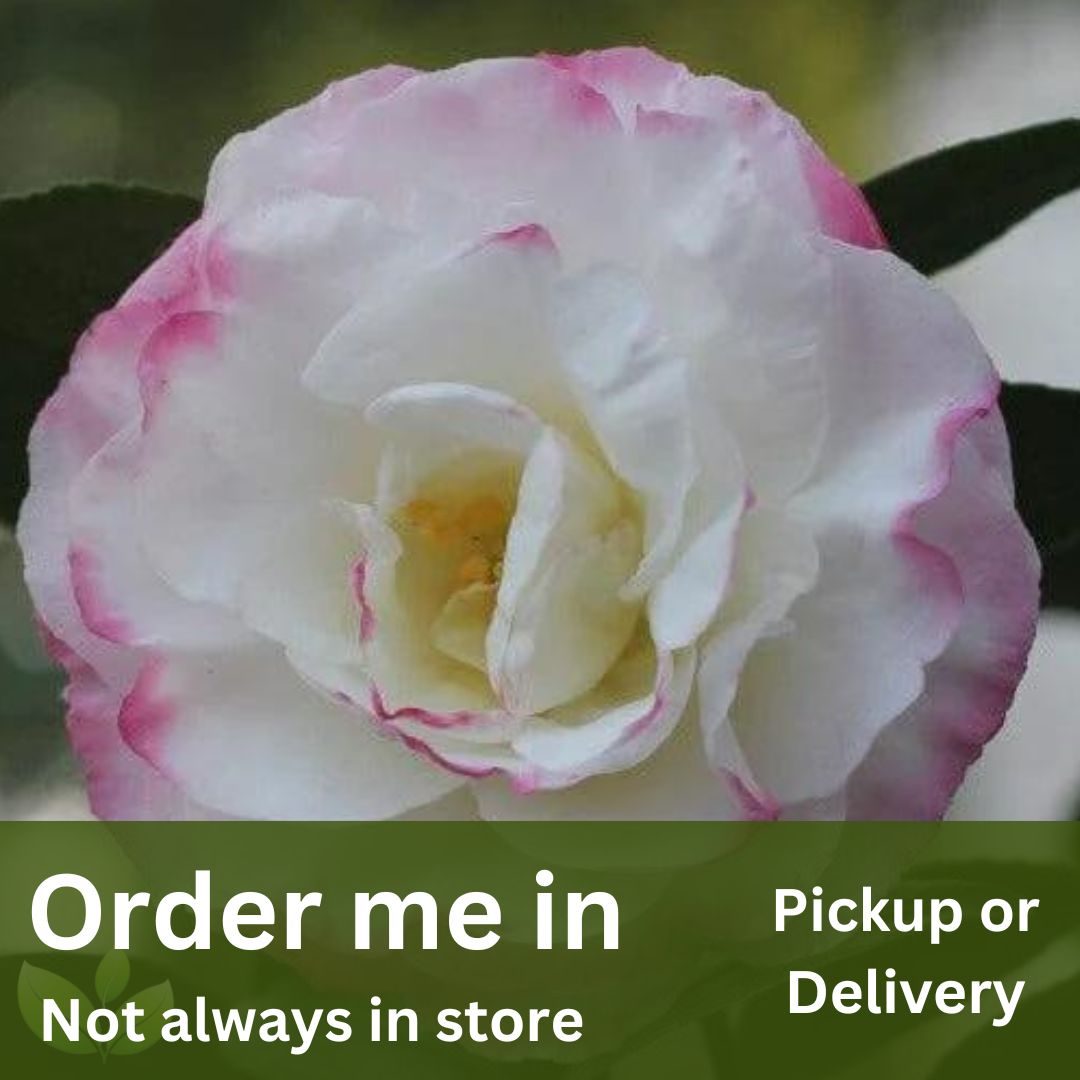
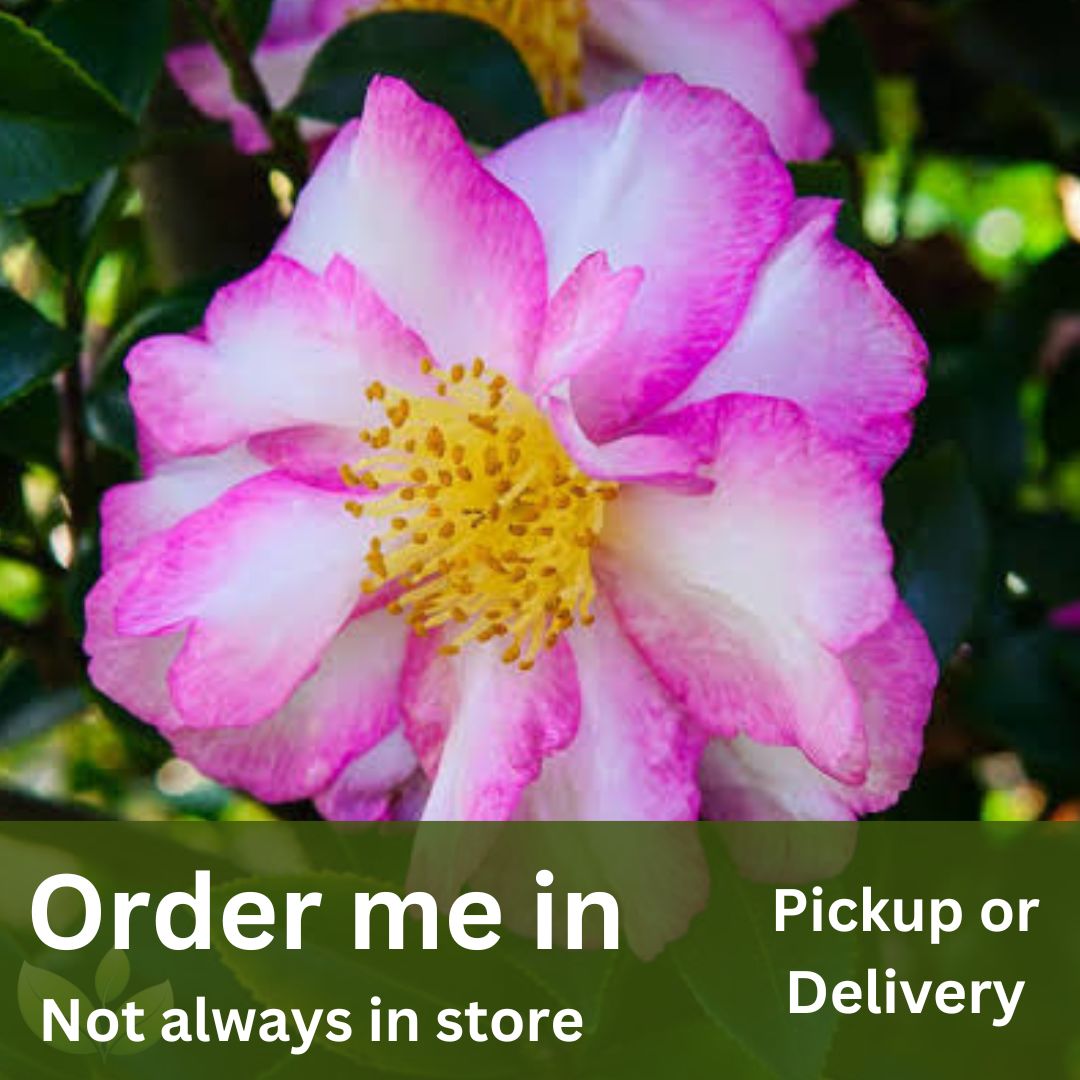
Camellia sasanqua 'Something Special' is a beautiful evergreen flowering shrub admired for its large, two-toned flowers and vigorous, upright growth habit. Its elegant white blooms, delicately edged and flushed with deep pink, create a spectacular display during autumn and early winter. Combined with glossy dark green foliage, this attractive camellia provides year-round garden appeal and is an excellent choice for flowering hedges, privacy screening and feature planting. With its naturally dense growth and excellent response to pruning, 'Something Special' is particularly well suited to creating attractive flowering screens in Sunshine Coast gardens. Flowers Large, single to semi-double flowers featuring white petals with distinctive deep pink margins and flushing. Prominent golden-yellow stamens add further contrast. Flowers are produced abundantly during autumn and early winter, creating a beautiful seasonal display. Foliage Glossy, dark green evergreen leaves with a slightly serrated edge. The dense foliage provides attractive year-round colour and makes this variety particularly useful for screening and hedging. Fruit Small, rounded woody seed capsules may occasionally develop following flowering but are not a significant ornamental feature. Form & Size Vigorous, upright and bushy evergreen shrub, reaching approximately 3–4 m high × 2–2.5 m wide when mature. In favourable conditions, plants may spread wider if left unpruned. Responds well to regular trimming and can be maintained as a dense hedge around 1.5–3 m high. Growing Conditions Position: Full sun to partial shade. Morning sun with some afternoon protection is beneficial in hotter locations. Soil: Fertile, slightly acidic, well-drained soil enriched with organic matter. Water: Regular watering during establishment. Maintain consistent moisture during prolonged dry periods. Frost: Tolerates light frost once established. Wind: Prefers protection from strong, drying winds, although established plants tolerate moderately exposed positions. Climate: Well suited to subtropical and temperate gardens, including the Sunshine Coast. Uses Ideal for flowering hedges, privacy screening, boundary planting, feature shrubs, formal gardens, espalier and large decorative pots. Particularly effective when planted in rows to create a dense evergreen screen with a spectacular autumn flower display. Maintenance Apply organic mulch around the root zone to conserve moisture and maintain healthy soil conditions. Fertilise with a suitable camellia and azalea fertiliser during spring. Prune after flowering to encourage dense branching and maintain the desired height and shape. Avoid allowing the soil to dry out excessively during establishment. Notes 'Something Special' is a vigorous-growing sasanqua camellia valued for its distinctive white and pink flowers. Its upright growth habit makes it particularly suitable for medium to tall flowering hedges. For hedging, plants can generally be spaced approximately 1–1.5 m apart, depending on the desired density and available growing space. Companion Plants Gardenia, Azalea, Loropetalum, Hydrangea, Liriope and other Camellia varieties. Common Name: Something Special Camellia Botanical Name: Camellia sasanqua 'Something Special' Family: Theaceae Origin: Horticultural cultivar; Camellia sasanqua is native to Japan.

Regular price $35.00 AUD
Regular price Sale price $35.00 AUD
Unit price  per 
Camellia sasanqua Wahroonga – Camellia Wahroonga plant Garden centre Sunshine Coast

Camellia sasanqua Wahroonga

Camellia sasanqua 'Wahroonga' is an elegant evergreen shrub with an upright, dense growth habit and an abundance of beautiful pink flowers edged with lighter tones. Its attractive foliage and reliable autumn flowering make it a wonderful choice for creating flowering hedges, privacy screens and feature plantings. Flowers Large, predominantly pink single blooms with paler to white-edged petals and visible golden stamens. Flowers appear during autumn and early winter. Foliage Glossy, dark green evergreen leaves that provide year-round colour and excellent screening. Fruit Small seed capsules may occasionally form following flowering. Form & Size Dense, upright shrub reaching approximately 3 m high × 1.5–2 m wide, potentially taller in favourable conditions. Growing Conditions Position: Full sun to partial shade. Soil: Slightly acidic, fertile and well drained. Water: Regular during establishment and extended dry weather. Frost: Tolerates light frost once established. Wind: Shelter from strong, drying winds. Climate: Suitable for Sunshine Coast and other mild subtropical to temperate gardens. Uses Flowering hedges, screening, boundary planting, garden features, espalier and large containers. Maintenance Apply organic mulch, fertilise in spring and prune after flowering to maintain the desired height and shape. Notes An excellent choice for gardeners wanting an attractive evergreen screen with a soft pink seasonal flower display. Companion Plants Gardenia, Azalea, Loropetalum, Hydrangea and Liriope. Common Name: Wahroonga CamelliaBotanical Name: Camellia sasanqua 'Wahroonga'Family: TheaceaeOrigin: Horticultural cultivar; sasanqua camellias originate from Japan.

Regular price $35.00 AUD
Regular price Sale price $35.00 AUD
Unit price  per