

10 of Our Favourite Grevilleas for Sunshine Coast Gardens
Grown and cared for at our Sunshine Coast nursery.
Delivery available across all the Sunshine Coast.
Delivery available across Brisbane and surrounding areas.
Collect from our Caloundra West nursery once ready.
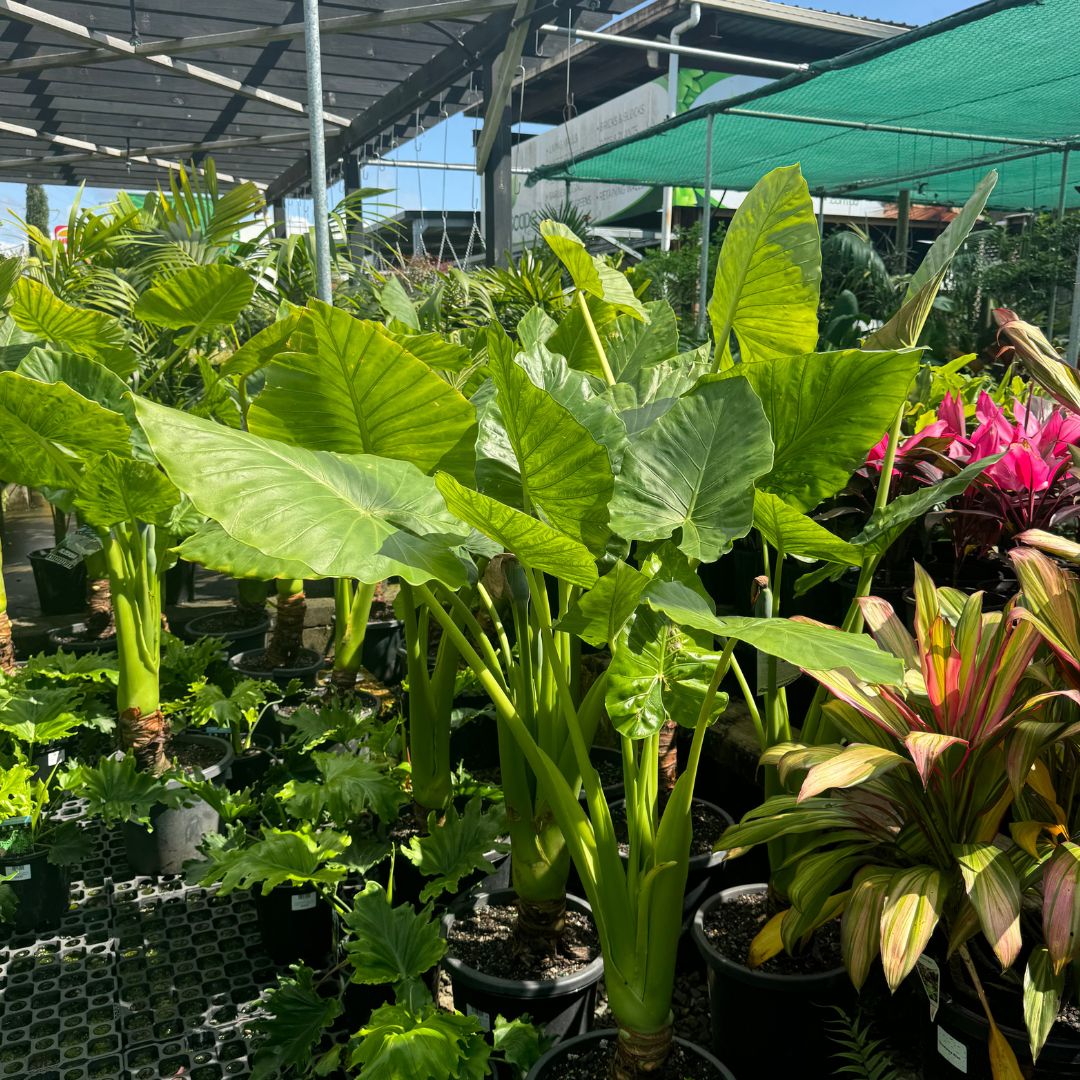
Alocasia macrorrhiza, commonly known as Giant Taro or Giant Elephant Ear, is a spectacular tropical foliage plant valued for its enormous, upright green leaves and impressive architectural form. Its bold, arrow-shaped foliage creates an instant tropical atmosphere, making it an outstanding feature plant for large gardens, rainforest-inspired landscapes and sheltered outdoor spaces.
With its vigorous growth and commanding presence, Giant Taro is particularly well suited to tropical and subtropical gardens throughout the Sunshine Coast. Its lush foliage provides height, structure and a dramatic contrast against smaller tropical plants, palms and ferns.
Produces occasional pale green to creamy-white flowers consisting of a central spadix surrounded by a greenish spathe, typical of plants in the Araceae family. Flowering is most likely during warmer months on mature plants, although the flowers are relatively inconspicuous compared with the large foliage.
Features enormous, glossy, deep-green, arrow-shaped leaves held upright on thick, sturdy stalks. The prominent veins and broad leaf blades create a dramatic tropical appearance.
Under favourable growing conditions, individual leaves can exceed 1 metre in length. The foliage is generally held upright rather than drooping, distinguishing it from some other plants commonly sold as Elephant Ears.
Following successful pollination, small berry-like fruits may develop along the flowering spadix. These can turn orange-red as they mature. Fruiting is uncommon in many cultivated garden specimens, and the plant is primarily grown for its ornamental foliage.
Height: Approximately 2–4 metres
Width: Approximately 2–3 metres
Growth Habit: Large, upright, clump-forming tropical perennial with a thick, developing stem
Growth Rate: Fast during warm, humid conditions
In ideal tropical environments, mature specimens can grow considerably larger. Allow generous space for the mature foliage, particularly when planting near pathways, buildings or outdoor entertaining areas.
Sunlight: Prefers partial shade to bright, filtered sunlight. Established plants can tolerate considerable direct sun when adequate soil moisture is available, although protection from intense afternoon sun helps maintain attractive foliage.
Soil: Thrives in fertile, organically enriched soil with good drainage and moisture retention. Incorporating compost and organic matter encourages vigorous growth.
Water: Requires regular watering, particularly during establishment and warmer weather. Prefers consistently moist soil and can tolerate wetter conditions than many other ornamental plants, provided the root zone does not become stagnant.
Frost: Frost sensitive. Cold weather may damage the foliage, and severe frost can cause substantial dieback. Best grown in warm, protected positions.
Wind: Prefers shelter from strong winds, which can tear or damage the enormous leaves.
Climate: Excellent for tropical and subtropical climates, including the Sunshine Coast and South East Queensland. Performs best in warm, humid environments.
Tropical Gardens: Creates an impressive rainforest-inspired appearance with its enormous foliage.
Feature Planting: Ideal as a bold architectural feature in spacious garden beds.
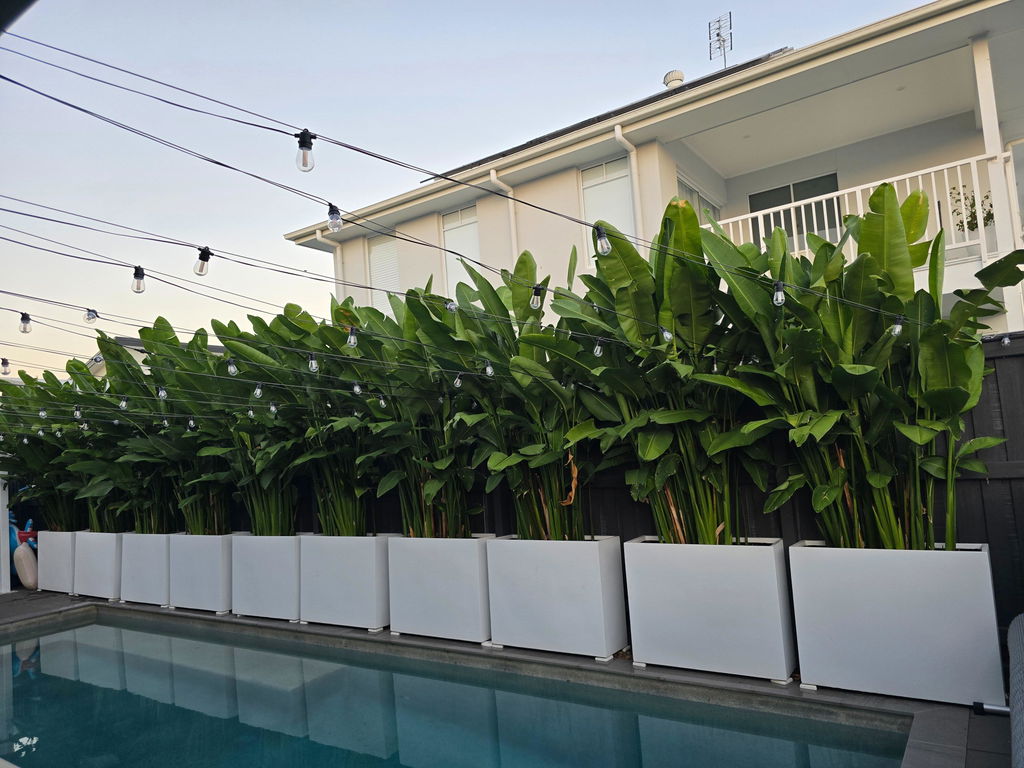
Poolside Landscaping: Adds a resort-style tropical atmosphere in sheltered positions.
Rainforest Gardens: Excellent for creating lush layers beneath taller trees and palms.
Large Courtyards: Provides dramatic foliage and height where sufficient growing space is available.
Mass Planting: Can be planted in groups to create a dense, tropical landscape effect.
Large Containers: Suitable for substantial decorative pots, although container-grown plants may require additional watering and feeding.
Alocasia macrorrhiza is relatively easy to maintain in suitable growing conditions.
Remove older, yellowing or damaged leaves as required to maintain a neat appearance. Use clean pruning tools and cut unwanted leaf stalks close to their attachment point.
Apply a balanced slow-release fertiliser during spring and summer to support vigorous foliage growth. Maintain a generous layer of organic mulch around the base to conserve moisture and improve soil conditions.
During cooler months, growth may slow and older leaves may deteriorate. Reduce watering where necessary, particularly if the plant is not actively growing.
Established plants may develop offsets around the base, which can be separated when required.
Giant Taro is a very large-growing plant and should be positioned where its mature height and spread can be accommodated without obstructing pathways or structures.
Although some traditional food uses are associated with this species, all parts contain irritating calcium oxalate crystals and should not be eaten raw. Incorrect preparation can cause serious irritation or poisoning. It should be treated as an ornamental plant rather than a food crop.
Keep away from pets and children who may chew the foliage. Sap may irritate sensitive skin, so gloves are recommended when pruning or handling damaged plant material.
Alocasia macrorrhiza is sometimes confused with other large Elephant Ear plants, including Alocasia odora, Alocasia 'Portodora' and species of Colocasia. Its large upright foliage and substantial mature size are distinguishing characteristics.
Alocasia 'Portodora': Provides contrasting ruffled foliage and a slightly more compact growth habit.
Alpinia nutans – Dwarf Cardamom: Adds dense, aromatic foliage beneath the larger leaves.
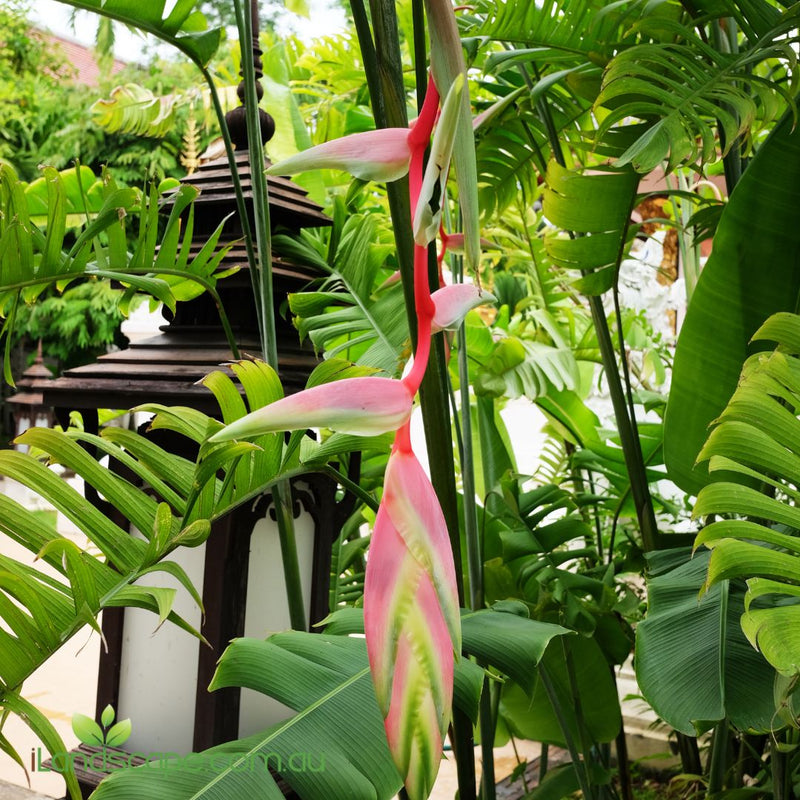
Heliconia: Introduces colourful tropical flowers and contrasting upright growth.
Philodendron Xanadu: Creates a lower-growing layer of deeply divided foliage.
Bird's Nest Fern: Complements the tropical appearance with lush, arching green fronds.
Cordyline: Adds colourful foliage contrast and vertical interest.
Common Name: Giant Taro / Giant Elephant Ear / Elephant Ear
Botanical Name: Alocasia macrorrhiza (L.) G.Don
Family: Araceae
Origin: Tropical Asia and the western Pacific
Read lessQuantity:
Our plants and pots are sold both online and at our nursery, so stock availability can change throughout the day.
Need a specific quantity or planning a larger order? Chat with our team using the chat button to confirm availability before purchasing.
Usually ready in 5+ days —
Delivery Options
Product Availability
Plants & Pots come and go all year around.
Where are our plants Grown and how do we grow them
How to Look after your plants like we do

49 Caloundra Road
Caloundra West QLD 4551
Australia
Pickup available, usually ready in 5+ days