

10 of Our Favourite Grevilleas for Sunshine Coast Gardens

Grown and cared for at our Sunshine Coast nursery.
Delivery available across all the Sunshine Coast.
Delivery available across Brisbane and surrounding areas.
Collect from our Caloundra West nursery once ready.
Licuala ramsayi, commonly known as the Australian Fan Palm, Queensland Fan Palm or Ramsay's Fan Palm, is a spectacular Australian native palm admired for its large, circular, pleated leaves and elegant tropical appearance. Naturally occurring in the tropical rainforests of North Queensland, this distinctive palm is an excellent choice for creating a lush, rainforest-inspired landscape.
Australian Fan Palms are particularly admired for their impressive fan-shaped foliage, which creates a bold architectural feature in tropical gardens. The large, glossy green leaves are deeply pleated and divided into wedge-shaped segments, forming an almost circular fan that gives the palm its distinctive appearance.
Unlike feather-leaved palms such as Alexander Palms and Bangalow Palms, Licuala ramsayi produces broad, rounded leaves that create a dramatic tropical effect. The foliage is supported by long, slender leaf stalks, allowing the large fans to spread gracefully around the crown.
As the palm matures, it develops a single, slender trunk topped with a crown of impressive green foliage. Young plants grow slowly and often remain close to ground level for several years before developing a noticeable trunk.
Mature Australian Fan Palms may produce long, branching flower clusters carrying small, creamy-white flowers. These are followed by rounded fruits that ripen to bright red, providing additional ornamental interest and attracting wildlife.
Well suited to warm, sheltered gardens throughout the Sunshine Coast and South East Queensland, Licuala ramsayi performs best in part shade, filtered sunlight and consistently moist, fertile soil. Its preference for humidity and protection from harsh afternoon sun makes it particularly suitable for tropical courtyards, rainforest gardens and sheltered garden beds.
The combination of impressive fan-shaped foliage, elegant growth habit and Australian native origins makes Licuala ramsayi an outstanding feature palm for tropical landscaping.
Mature Australian Fan Palms produce branching clusters of small, creamy-white to pale yellow flowers.
The flower clusters emerge among or beneath the foliage and may extend beyond the leaf crown.
Flowering is generally more noticeable on mature plants growing in favourable tropical conditions.
The flowers may attract bees and other pollinating insects.
Large, glossy green, almost circular fan-shaped leaves with prominent pleating.
The leaves are divided into wedge-shaped segments, creating a distinctive rounded appearance.
Mature leaves can reach approximately 1–2 metres across under favourable growing conditions.
The foliage is supported by long, slender leaf stalks, creating an attractive layered tropical canopy.
New leaves emerge from the centre of the crown and gradually unfold into broad, pleated fans.
Small, rounded fruits develop following successful flowering and pollination.
The fruits initially appear green before gradually ripening to bright red.
The colourful fruit provides seasonal ornamental interest and may attract native birds and other wildlife.
Fruit production is generally more noticeable on established, mature palms.
Height: Approximately 5–10 metres in cultivation, potentially reaching 15 metres or more in ideal tropical rainforest conditions.
Width: Approximately 3–5 metres across the mature canopy.
Growth Rate: Slow to moderate, particularly during the juvenile stage.
Habit: Upright, single-trunked palm with a distinctive crown of large, rounded fan-shaped leaves.
Trunk: Slender, grey to brownish trunk developing as the palm matures.
Canopy: Broad, pleated fan-shaped foliage forming an attractive tropical crown.
Planting Spacing: Approximately 3–4 metres apart for group planting, allowing sufficient room for the mature foliage.
Position: Part shade to filtered sunlight. Young palms prefer protection from harsh afternoon sun. Established palms may tolerate increased sunlight when provided with adequate moisture and humidity.
Soil: Prefers fertile, moisture-retentive soil rich in organic matter. Performs best in well-drained soils that remain consistently moist.
Watering: Water regularly during establishment and maintain consistent soil moisture. Avoid prolonged dry conditions, particularly during hot weather.
Climate: Best suited to tropical and warm subtropical climates. Suitable for sheltered, humid gardens throughout the Sunshine Coast and South East Queensland.
Frost Tolerance: Sensitive to frost, particularly when young. Best grown in warm, protected positions.
Coastal Tolerance: Suitable for sheltered coastal gardens but should be protected from strong, salt-laden winds.
Fertilising: Apply a balanced slow-release palm fertiliser during spring and throughout the warmer growing season as required.
Pruning: Minimal pruning required. Remove older, damaged or discoloured leaves as necessary, avoiding unnecessary removal of healthy foliage.
Tropical Landscaping: An excellent choice for creating lush tropical gardens with bold, distinctive foliage.
Feature Palm: The impressive circular fan-shaped leaves make Australian Fan Palms an outstanding specimen plant.
Rainforest Gardens: Ideal for creating natural rainforest-inspired landscapes with layered tropical foliage.
Shaded Garden Beds: Particularly suitable for sheltered garden beds beneath taller palms and established trees.
Courtyard Gardens: Adds dramatic tropical character to spacious, sheltered courtyards with filtered sunlight.
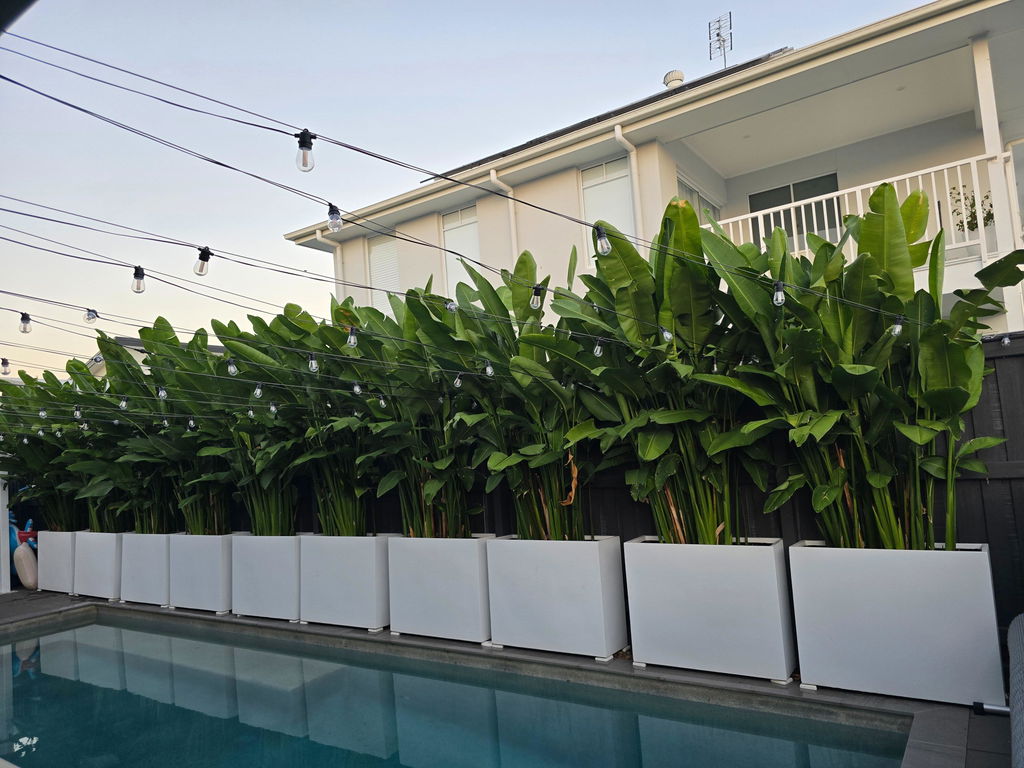
Poolside Landscaping: Creates an attractive tropical backdrop around swimming pools in protected positions away from harsh reflected heat and strong winds.
Group Planting: Plant several together to create a lush, layered tropical display.
Large Containers: Young plants can be grown in large decorative pots and planters where adequate moisture and drainage are maintained.
Contemporary Landscaping: The bold, architectural foliage complements modern garden designs and tropical architectural features.
Australian Fan Palms are relatively easy to maintain when grown in suitable warm, humid conditions with consistent moisture and protection from harsh sunlight.
Water regularly after planting to encourage healthy root development. Young palms are particularly sensitive to drying out and benefit from consistent soil moisture during warmer weather.
Apply a generous layer of organic mulch around the root zone to help retain moisture, regulate soil temperatures and improve soil conditions. Keep mulch clear of the trunk.
Feed with a quality slow-release palm fertiliser during the active growing season to support healthy foliage development. Avoid excessive fertilising, particularly on young plants with slower growth rates.
Remove older, damaged or yellowing leaves as required to maintain a neat appearance. Avoid removing healthy green foliage unnecessarily, as this can reduce the palm's growth and vigour.
Monitor occasionally for scale insects, mealybugs and nutrient deficiencies, particularly on young plants or those growing in containers.
Protect the large fan-shaped leaves from strong winds, as exposed conditions can cause tearing or damage to the foliage.
Licuala ramsayi is an Australian native palm naturally occurring in the tropical rainforests and wet forest environments of North Queensland.
It is particularly admired for its large, almost circular fan-shaped leaves, which distinguish it from many other commonly grown palm species.
Australian Fan Palms are generally slow-growing when young and may take several years to develop a noticeable trunk. Growth improves in warm, humid conditions with adequate moisture and nutrients.
Although mature palms can reach considerable heights, young plants remain compact for extended periods, making them attractive for sheltered tropical gardens and large decorative containers.
Licuala ramsayi is a single-trunked palm and does not naturally develop multiple stems from the base.
The large leaves are sensitive to strong winds and harsh sunlight, particularly when young. Sheltered planting positions help maintain the best foliage appearance.
Australian Fan Palms prefer consistently moist conditions and are less tolerant of prolonged drought than many commonly grown landscape palms.
Their distinctive foliage makes them particularly effective when planted against darker tropical vegetation, feature walls or beneath taller rainforest trees.
Archontophoenix alexandrae: Alexander Palms provide height and an attractive tropical canopy above Australian Fan Palms.
Archontophoenix cunninghamiana: Bangalow Palms create a lush rainforest-inspired setting with elegant trunks and arching foliage.
Chamaedorea seifrizii: Bamboo Palms provide fine, upright foliage that contrasts with the broad fan-shaped leaves.
Alocasia macrorrhiza: Large, bold tropical leaves complement the dramatic foliage of Australian Fan Palms.
Philodendron Xanadu: Dense, deeply lobed foliage creates an attractive tropical underplanting.
Rhapis excelsa: Elegant fan-shaped foliage provides an interesting combination of different leaf shapes and textures.
Asplenium australasicum: Bird's Nest Ferns provide broad, glossy green foliage for shaded tropical garden beds.
Alpinia: Attractive ginger foliage and seasonal flowers complement rainforest-inspired landscaping.
Monstera deliciosa: Large, divided leaves create a bold tropical appearance alongside the circular fan-shaped foliage.
Read lessQuantity:
Our plants and pots are sold both online and at our nursery, so stock availability can change throughout the day.
Need a specific quantity or planning a larger order? Chat with our team using the chat button to confirm availability before purchasing.
Usually ready in 5+ days —
Delivery Options
Product Availability
Plants & Pots come and go all year around.
Where are our plants Grown and how do we grow them
How to Look after your plants like we do

49 Caloundra Road
Caloundra West QLD 4551
Australia
Pickup available, usually ready in 5+ days